Quotessence
Home / Quotes / Quote by Isaac Asimov

Quote by Isaac Asimov

“The Solarians have given up something mankind has had for a million years; something worth more than atomic power, cities, agriculture, tools, fire, everything; because it's something that made everything else possible. (...) The tribe, sir. Co-operation between individuals. Solaria has given it up entirely. It is a world of isolated individuals and the planet's only sociologist is delighted that this is so. That sociologist, by the way, never heard of sociomathematics, because he is inventing his own science. There is no one to teach him, no one to help him, no one to think of something he himself might miss. The only science that really flourishes on Solaria is robotics and there are only a handful of men involved in that, and when it came to an analysis of the interaction of robots and men, they had to call in an Earthman to help.”

Quote by Isaac Asimov

Work

The Naked Sun

In this suspenseful story, a renowned detective delves into a perplexing case, navigating a complex web of deceit and intrigue. more

Author
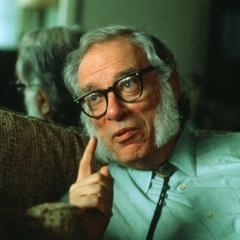
Isaac Asimov
Isaac Asimov

Isaac Asimov, born on January 2, 1920 in Poland and died on April 6, 1992 in the United States, was a renowned American science fiction author, science writer, and literary critic, known as the 'Father of Science Fiction'. His works covered a wide range of science fiction themes, including robots, space exploration, and time travel, and had a profound impact on science fiction literature and the popularization of science. more

You May Also Like

“A society like the Italian, the very disorder of which renders the action of the State useless and ridiculous, is not without its charm and helps us to grasp this political truth: the principal task of the State today is to justify its own existence. To do so, it has to annihilate society's capacity to survive by itself. Surreptitiously undermining all forms of spontaneous regulation, deregulating, desocializing, breaking down the traditional mechanisms of bodies and antibodies, in order to substitute its artificial mechanisms - such is the strategy of a State locked in a subtle struggle with society - exactly like medicine, which lives off the destruction of natural defences and their replacement by artificial ones. In Rome, Niccolini manages to counter the obsessive fear of terrorism with a cultural revival. To the Romans who no longer dare go out in the evenings he offers festivals, performances, poetry galas. He brings culture down into the street. He combats the terrorist festival with the cultural, advertising festival. He will be criticized for wasteful expenditure, but the only way to fight terrorism is not to create 'solid' institutions, but to put upon the stage a culture that is as sacrificial, eccentric, and ephemeral as the terrorist acts themselves. One festival against the other. If terrorism is a sort of murderous advertising campaign which keeps our imagination on tenterhooks, it can be countered only by a piece of even more effective advertising.”

“Very few people I knew voted for Reagan, but given that he didn't do anything crazy and started making peace with the Soviet Union, affluent college-educated people, liberals and otherwise, didn't disagree very ferociously about politics in the 1980s and '90s, and certainly not about economics. In retrospect, that rough consensus looks like the beginning of an unspoken class solidarity among the bourgeoisie--nearly everyone suspicious of economic populism, but some among us, the Republicans, more suspicious that the rest. Affluent college-educated people, Democrats as well as Republicans, began using the phrase socially liberal but fiscally conservative to describe their politics, which meant low taxes in return for tolerance of ...whatever, as long it didn't cost affluent people anything. It was a libertarianism lite that kept everything nice and clubbable and, unlike Republican conservatism, at least had the virtue of ideological consistency.”