Quotessence
Home / Quotes / Quote by F. Scott Fitzgerald

Quote by F. Scott Fitzgerald

“She hurried into a new spring evening dress of the frailest fairy blue. In the excitement of seeing herself in it, it seemed as if she had shed the old skin of winter and emerged a shining chrysalis with no stain; and going downstairs her feet fell softly just off the beat of the music from below. It was a tune from a play she had seen a week ago in New York, a tune with a future...”

Quote by F. Scott Fitzgerald

Work

The Basil and Josephine Stories

This book presents a series of interconnected tales that revolve around the lives of Basil and Josephine, exploring their relationships and experiences in various settings. more

Author
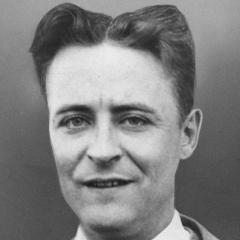
F. Scott Fitzgerald
F. Scott Fitzgerald

F. Scott Fitzgerald was an American author of novels and short stories, renowned for his works that encapsulate the Jazz Age and the Roaring Twenties. His most celebrated novel, 'The Great Gatsby,' is a critical and commercial success, reflecting the themes of the American Dream and the decline of the American upper class. more

You May Also Like

“A single tune danced through his mind and all his attention rested upon it. It was a tune that seethed through the magical flood, shaped it, formed it, lived through it hugely, lived through it minutely, was its very essence. It bounced and trilled along, at first a little tripping tune, then it slowed, then it danced again but with more difficulty, seemed to founder in eddies of doubt and confusion, and then suddenly revealed that the eddies were just the first ripples of a huge new wave of energy surging up joyfully from underneath.”

“There is no communication possible between men any longer, now that the codes have been destroyed, including even the code of exchange in repetition. We are all condemned to silence - unless we create our own relation with the world and try to tie other people into the meaning we thus create. That is what composing is. Doing solely for the sake of doing, without trying artificially to recreate the old codes in order to reinsert communication into them. Inventing new codes, inventing the message at the same time as the language. Playing for one's own pleasure, which alone can create the conditions for new communication. A concept such as this seems natural in the context of music. But it reaches far beyond that; it relates to the emergence of the free act, self-transcendence, pleasure of being instead of having.”

“Remember, your problems are not punishments from Allah but His help. They keep arising, each time a little harder, until you finally learn the lesson. The moment you correct your answer in the exam of this Duniya, the problem will fade away, In Sha Allah. So don’t be afraid—be wise, embody the lesson, and move forward with faith. Take that light and let it shine in your life”

“Christophe fancied that on the day of the Creation the Great Sculptor did not take very much trouble to put in order the scattered members of his rough-hewn creatures, and that He had adjusted them anyhow without bothering to find out whether they were suited to each other, and so every one was made up of all sorts of pieces; and one man was scattered among five or six different men; his brain was with one, his heart with another, and the body belonging to his soul with yet another; the instrument was on one side, the performer on the other. Certain creatures remained like wonderful violins, forever shut up in their cases, for want of anyone with the art to play them.”