Quotessence
Home / Quotes / Quote by Fyodor Dostoevsky

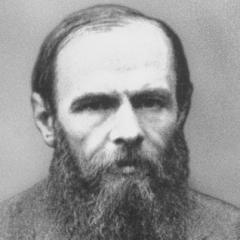
Quote by Fyodor Dostoevsky

“This strong and rough man, whose feathers were constantly being ruffled, had suddenly softened and brightened. Something unusual and entirely unexpected had begun to stir in his soul. Three years of separation, three years of a broken marriage had dislodged nothing from his heart. And perhaps every day of those three years he had dreamed of her, of the beloved being who had once said 'I love you' to him. Knowing Shatov, I can say for certain that he would never have allowed himself even to dream that any woman could say 'I love you' to him. He was fiercely chaste and modest, regarded himself as a dreadful freak, hated his own face and character, compared himself to some monster who was fit only to be taken around and exhibited at fairs. As a consequence of all this, he valued honesty above all things and dedicated himself to his convictions to the point of fanaticism; he was sullen, proud, quick to anger and sparing with words.”

Quote by Fyodor Dostoevsky

Book:Demons

Work

Demons

Browse quotes and source details for this work. more

Author

Fyodor Dostoevsky
Fyodor Dostoevsky

A renowned Russian novelist and a pioneer of psychological novels. His works deeply reveal the complexity of human nature and the injustice of society, having a profound impact on literature worldwide. more

You May Also Like

“This strong and rough man, whose feathers were constantly being ruffled, had suddenly softened and brightened. Something unusual and entirely unexpected had begun to stir in his soul. Three years of separation, three years of a broken marriage had dislodged nothing from his heart. And perhaps every day of those three years he had dreamed of her, of the beloved being who had once said 'I love you' to him. Knowing Shatov, I can say for certain that he would never have allowed himself even to dream that any woman could say 'I love you' to him. He was fiercely chaste and modest, regarded himself as a dreadful freak, hated his own face and character, compared himself to some monster who was fit only to be taken around and exhibited at fairs. As a consequence of all this, he valued honesty above all things and dedicated himself to his convictions to the point of fanaticism; he was sullen, proud, quick to anger and sparing with words. But now this single being who had loved him for two weeks (he had always, always believed that!), this being whom he had always regarded as immeasurably superior to himself despite his utterly sober understanding of her faults; this being whom he could forgive everything, everything (of which there really true, so that in his eyes he himself was guilty of everything could be absolutely no before her), this woman, this Marya Shatova, was suddenly question, for just the opposite was actual again in his house, before him again... this was almost impossible to understand!”

“This was a longing she had never permitted herself to acknowledge. She faced it now. She thought: If emotion is one's response to the things the world has to offer, if she loved the rails, the building, and more: if she loved her love for them-there was still one response, the greatest, that she had missed. She thought: To find a feeling that would hold, as their sum, as their final expression, the purpose of all the things she loved on earth . . . To find a consciousness like her own, who would be the meaning of her world, as she would be of his . .. No, not Francisco d'Anconia, not Hank Rearden, not any man she had ever met of admired . . . A man who existed only in her knowledge of her capacity for an emotion she had never felt, but would have given her life 10 experience ... She twisted herself in a slow, faint movement, her breasts pressed to the desk; she felt the longing in her muscles, in the nerves of her body. Is that what you want? Is it as simple as that?- she thought, but knew There was some unbreakable link between her that it was not simple. love for her work and the desire of her body; as if one gave her the right to the other, the right desire would neg as if one were the completion of the other and the desire would never be satisfied, except by a being of equal greatness.”

“So many of us love tragic drama, rainy days, tearjerker movies. We adore cherry blossoms--we even hold festivals in their honor--preferring them to equally lovely flowers because they die young. (The Japanese, who love sakura flowers most of all, attribute this preference to mono no aware, which means a desired state of gentle sorrow brought about by "the pathos of things" and "a sensitivity to impermanence").”

“Longing itself is divine," writes the Hindu spiritual leader Sri Sri Ravi Shankar. "Longing for worldly things makes you inert. Longing for Infinity fills you with life. The skill is to bear the pain of longing and move on. True longing brings up spurts of bliss." At the heart of all these traditions is this pain of separation, the longing for reunion, and occasionally, the transcendent achievement of it.”