Quotessence
Home / Quotes / Quote by Thomas Mann

Quote by Thomas Mann

“He was more beautiful than words can say, and Aschenbach felt painfully, as he had often done, that words are able to praise physical beauty but not to reproduce it.”

Quote by Thomas Mann

Work

Death in Venice

In this novella, the protagonist, an aging writer, becomes entranced by the beauty of Venice and its inhabitants. His fascination leads to a complex relationship with a young boy, which ultimately results in a profound existential crisis. The story delves into the complexities of artistic creation and the moral dilemmas faced by the protagonist amidst the backdrop of the picturesque and decaying city of Venice. more
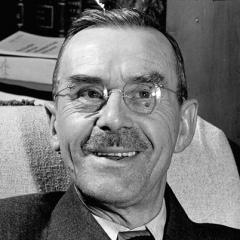
Author

Thomas Mann
Thomas Mann

Thomas Mann, born on June 6, 1875, and died on August 12, 1955, was a German novelist and one of the greatest writers of the 20th century. Known for his profound psychological portrayals and rich imagination, his works extensively covered themes such as individual and society, history and reality. His masterpieces include 'Buddenbrooks' and 'The Magic Mountain'. more

You May Also Like

“It is no accident that the psalmist enjoins us to taste and see that the Lord is good—not simply to reason or confess that God is good, but to taste it. My body, this tea, and the quiet twilight are teaching me God's goodness through my senses. I'm tasting, hearing, feeling, seeing, and smelling that God is good.”

“She stands there until she realizes she is waiting. Waiting for someone to help. To come and fix the mess she's in. But no one is coming. No one remembers, and if she resigns herself to waiting, she will wait forever. So she walks. And as she walks, she studies Paris. Makes note of this house, and that road, of bridges, and carriage horses, and the gates of a garden. Glimpses roses beyond the wall, beauty in the cracks.”

“If one wanted beauty, one had only to rest one's eyes on her, so fine and old and lovely, like an ivory carving; flowing down like water into her chair, so slight and supple were her limbs, the firelight casting a flush of rose over her features and snowy hair. Youth had no beauty like the beauty of an old face; the face of youth was an unwritten page. Youth could never sit as still as that, in absolute repose, as though all haste, all movement, were over and done with, and nothing left but waiting and acquiescence.”