Quotessence
Home / Quotes / Quote by Albert Camus

Quote by Albert Camus

“Until then he had only known the riches and the joys of poverty. But now heat and boredom and fatigue were showing him their curse, the curse of work so stupid you could weep and so interminably monotonous that it made the days too long and, at the same time, life too short.”

Quote by Albert Camus

Work

The First Man

This book delves into the life and achievements of a significant individual who is often considered a trailblazer in human progress. The narrative likely covers the individual's early life, significant milestones, and the impact of their work on society. more

Author

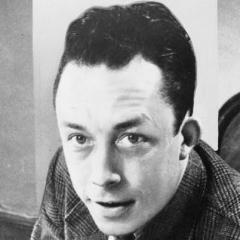
Albert Camus
Albert Camus

Albert Camus was a French author and philosopher, born on November 7, 1913, and died on January 4, 1960. Known for his unique existentialist philosophy and profound insights into human suffering, Camus' works include 'The Stranger', 'The Plague', and 'The Myth of Sisyphus', which have had a profound impact on 20th-century literature. more

You May Also Like

“There is a simple rule regarding wisdom: those who have a superficial knowledge cannot be wise. On the contrary, wise people have broad knowledge. However, besides the acquired knowledge, wisdom arises from observation and contemplation over a longer period of time. Wisdom is, therefore, often the privilege of older people who have a broad knowledge and respectable experience. Feel free to ask such people for advice.”

“But Henry was not prepared to submit. In a speech supporting his resolutions, he supposedly exclaimed, "Tarquin and Caesar had each his Brutus, Charles the First his Cromwell, and George the Third..." Before he could finish the phrase, red-robed Speaker of the House John Robinson cried, "Treason! Treason," as other burgesses took up the cry. But Henry stared the Speaker in the eye and finished his sentence: "...may profit by their example! If this be treason, make the most of it!”

“The rising greatness of our country is greatly tarnished by the general prevalence of deism, which with me, is but another name for vice and depravity....Amongst other strange things said of me,...I hear it is said by the deists that I am one of their number, and indeed, that some good people think I am no Christian. This thought gives me much more pain than the appellation of tory, because I think religion of infinitely higher importance than politics.' -- PATRICK HENRY, Letter to his daughter Elizabeth Aylett, August 20, 1796.”