Quotessence
Home / Quotes / Quote by Robert Bulwer-Lytton, 1st Earl of Lytton

Quote by Robert Bulwer-Lytton, 1st Earl of Lytton

“Since we parted yester eve, I do love thee, love, believe, Twelve times dearer, twelve hours longer,- One dream deeper, one night stronger, One sun surer,-thus much more Than I loved thee, love, before.”

Quote by Robert Bulwer-Lytton, 1st Earl of Lytton

Author
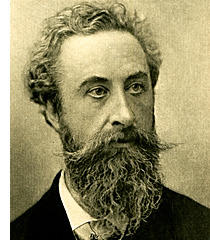
Robert Bulwer-Lytton, 1st Earl of Lytton

Robert Bulwer-Lytton, 1st Earl of Lytton (1831-1891), was a British politician, diplomat, and novelist who served as Viceroy of India from 1876 to 1880. Born into a distinguished British family, he began his career in diplomacy before entering politics. During his tenure as Viceroy, he witnessed Queen Victoria's proclamation as Empress of India. Lytton was also a prolific author, writing several novels and poetry. His daughter, Elizabeth Bulwer-Lytton, later became a renowned historian. more

You May Also Like

“Some day you will read in the papers that D.L. Moody of East Northfield, is dead. Don't you believe a word of it! At that moment I shall be more alive than I am now; I shall have gone up higher, that is all, out of this old clay tenement into a house that is immortal-a body that death cannot touch, that sin cannot taint; a body fashioned like unto His glorious body.”

“Don't be misled into believing that somehow the world owes you a living. The boy who believes that his parents, or the government, or any one else owes him his livelihood and that he can collect it without labor will wake up one day and find himself working for another boy who did not have that belief and, therefore, earned the right to have others work for him.”

“For my part, I believe that the vain, glorious and the violent will not inherit the earth. . . . In pursuance of that faith my friends and I take the hands of the dying in our hands. And some of us travel to the Pentagon, and others live in the Bowery and serve there, and others speak unpopularly and plainly of the fate of the unborn and of convicted criminals. It is all one.”

“I believe that almost all important, useful ideas are simple. Peter Whittle has recently put it nicely in an autobiographical essay. "If a piece of work is heavy and complicated then it is wrong." . . . Some writers feel that to express their ideas in simple terms is degrading. Some use complexity to disguise the paucity of their material. In fact, simplicity is a virtue and when, as here, it is both original and useful, it can represent a real advance in knowledge.”