Quotessence
Home / Quotes / Quote by Kenneth Clark

Quote by Kenneth Clark

Work

Civilisation

This book delves into the evolution of human societies, examining various aspects of civilization such as art, architecture, religion, and social structures across different eras and regions. more
Author

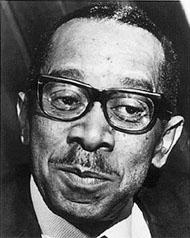
Kenneth Clark
Kenneth Clark

Kenneth Clark was a renowned psychologist, born on July 24, 1914, and passed away on May 1, 2005. He made significant contributions to the field of psychology, particularly in the areas of cognitive psychology and child psychology. more

You May Also Like

“However much the various phases of the French Revolution may have modelled themselves on Roman history the early phase on Republican virtue, the later on Imperial grandeur the fact remains that classicism depended on a fixed and rational philosophy; whereas the spirit of the Revolution was one of change and of emotion.”

“This became Delacroix 's theme: that the achievements of the spirit all that a great library contained were the result of a state of society so delicately balanced that at the least touch they would be crushed beneath an avalanche of pent-up animal forces.”

“Only the bad artists of the nineteenth century were frightened by the invention of photography; the good ones all welcomed it and used it. Degas liked it not only because it provided an accurate record, but because the snapshot showed him a means of escape from the classical rules of design. Through it he learnt to make a composition without the use of formal symmetry.”

“We are beginning to realize that even the most fortunate people are living far below capacity, and that most human beings develop not more than a small fraction of their potential mental and spiritual efficiency. The human race, in fact, is surrounded by a large area of unrealized possibilities, a challenge to the spirit of exploration.”

“Some day no one will have to work more than two days a week... The human being can consume so much and no more. When we reach the point when the world produces all the goods that it needs in two days, as it inevitably will, we must curtail our production of goods and turn our attention to the great problem of what to do with our new leisure.”