“I'm going to open another vottle. not a vottle, but a bottle. you open it and I'll drink it. and you try to write as much as I did without falling off of your chair.”
Quote by Charles Bukowski
Work
Charles Bukowski: portions from a wine-stained notebook : uncollected stories and essays, 1944-1990
This book is a compilation of previously unpublished works by Charles Bukowski, showcasing his distinctive style and insights into the human condition. The stories and essays delve into themes of alcoholism, loneliness, and the struggle for meaning in life. more
Author
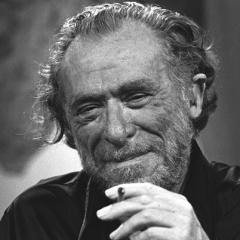
Charles Bukowski
Charles Bukowski, born on August 16, 1920, was an influential American poet. Known for his unique style and profound depiction of the lives of the underclass in America, he is considered one of the representatives of the Beat Generation. more
You May Also Like
Source: The Road film tie-in
“We need not stride resolutely towards catastrophe, merely because those are the marching orders.”
Source: 9-11 [neuf-onze]
“If everybody minded their own business... the world would go round a deal faster than it does.”
Source: Angels & Demons - Movie Tie-In: A Novel
“Vittoria slipped off her robe. 'You've never been to bed with a yoga master, have you?”
Source: Angels & Demons Special Illustrated Edition: A Novel
Source: Atlas Shrugged
Source: For the New Intellectual: The Philosophy of Ayn Rand (50th Anniversary Edition)