“Pierre Curie, a brilliant scientist, happened to marry a still more brilliant one-Marie, the famous Madame Curie-and is the only great scientist in history who is consistently identified as the husband of someone else.”
Book:Asimov on physics
“Pierre Curie, a brilliant scientist, happened to marry a still more brilliant one-Marie, the famous Madame Curie-and is the only great scientist in history who is consistently identified as the husband of someone else.”
This book delves into a wide array of physics topics, offering insights into the mechanics of the universe, the nature of matter and energy, and the theoretical underpinnings of scientific inquiry. Written by Isaac Asimov, a leading figure in both science fiction and science, the text provides a blend of informative and accessible content for readers interested in understanding the complexities of physics. more
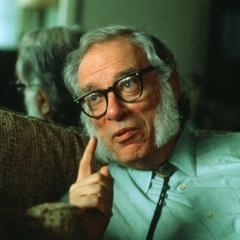
Isaac Asimov, born on January 2, 1920 in Poland and died on April 6, 1992 in the United States, was a renowned American science fiction author, science writer, and literary critic, known as the 'Father of Science Fiction'. His works covered a wide range of science fiction themes, including robots, space exploration, and time travel, and had a profound impact on science fiction literature and the popularization of science. more
“The search for historical laws is, I maintain, mistaken in principle.”
“A box is more a coffin for the human spirit than an inspiration.”
“You must be interested in finding the best way, not in having your own way.”