Quotessence
Home / Quotes / Quote by Louis O. Kelso

Quote by Louis O. Kelso

“The first principle of economic symmetry: building the economic power to consume simultaneously with the industrial power to produce.”

Quote by Louis O. Kelso

Author
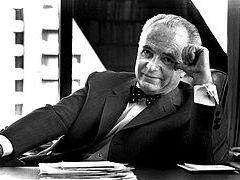
Louis O. Kelso
Louis O. Kelso

Louis O. Kelso was an American economist born on April 12, 1913. He is renowned for his extensive research in the fields of capital and distribution theories. Kelso proposed the concepts of 'shared economy' and 'profit sharing,' which have had a profound impact on subsequent economic theories and practices. more

You May Also Like

“The path the capitalist revolution will take faces in exactly the opposite direction from that taken by the communist revolution. It seeks to diffuse the private ownership of capital instead of abolishing it entirely. It seeks to make all men capitalists instead of preventing anyone from being a capitalist by making the State the only capitalist.”

“The political objective of universal capitalism is maximum individual autonomy, the separation of political power wielded by the holders of public office from economic power held by citizens, and the broad diffusion of privately owned economic power.”

“The primary cause of disorder and lawlessness today, as throughout history, is the poverty of the many in contrast to the affluence of the few. But a new element of unrest has been added: a growing awareness that mass poverty is caused by defective institutions that prevent our harnessing the physical capabilities of science, engineering, management and labor to create general affluence; in other words, a growing awareness that poverty in any country that is or can be industrialized, is man's not nature's fault.”

“The purpose of finance is to enable business to acquire the ownership of capital instruments before it has saved the funds to buy and pay for them. The logic used by business in investing is things that will pay for themselves is not today available to the 95% born without capital. Most of us owe instead of own. And the less the economy needs our labor, the less able we are to "save" our way to capital ownership.”