Quotessence
Home / Quotes / Quote by Nick Bostrom

Quote by Nick Bostrom

“How can we trace out the links between actions that people take today and really long-term outcomes for humanity - outcomes that stretch out indefinitely into the future? I call this effort macrostrategy - that is, to think about the really big strategic situation for having a positive impact on the long-term future. There's the butterfly effect: A small change in an initial condition could have arbitrarily large consequences.”

Quote by Nick Bostrom

Author
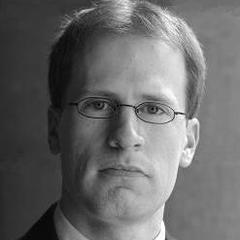
Nick Bostrom
Nick Bostrom

Nick Bostrom is a Swedish philosopher known for his research in philosophy, artificial intelligence, and the future of humanity. His work covers a range of topics including consciousness, artificial intelligence, human continuation, and bioethics. more

You May Also Like

“In the next century, we will be inventing radical new technologies - machine intelligence, perhaps nanotech, great advances in synthetic biology and other things we haven't even thought of yet. And those new powers will unlock wonderful opportunities, but they might also bring with them certain risks. And we have no track record of surviving those risks. So if there are big existential risks, I think they are going to come from our own activities and mostly from our own inventiveness and creativity.”

“The greatest existential risks over the coming decades or century arise from certain, anticipated technological breakthroughs that we might make in particular, machine super intelligence, nanotechnology and synthetic biology. Each of these has an enormous potential for improving the human condition by helping cure disease, poverty, etc. But one could imagine them being misused, used to create powerful weapon systems, or even some kind of accidental destructive scenario, where we suddenly are in possession of some technology that's far more powerful than we are able to control or use wisely.”

“The difference between what designers create are you know they're creating a little world every season, you know head to toe, a full look, shoes bags, dresses, the whole thing whereas street fashion is what people are really wearing. There is an element of new. There is an element of previous seasons. There is your own history, you know your sweatshirt from high school and vintage pieces and it's that kind of combination that I find so much more interesting than just the runway, but you know and I love fashion.”

“I love going to the runway shows. It's not so much for me a shopping trip as it is the appreciation of the craft of these design geniuses who come up with beautiful color combinations and beautiful proportion suggestions and these kind of ideas, so I look at the runway shows in very different ways, just kind of a romantic artistic interpretation of how they would like to see fashion going forward, but for me it's much more abstract. The runway shows are much more abstract than you know what ends up on people is much more real to me.”

“Everybody's version of style is totally different and that's what I think keeps me going out on the street everyday is going out and kind of seeing the variations and what things maybe I'd never seen quite that way that I find very curious and how people will be able to communicate their own persona through their clothing, their posture, the way they wear their hair. I think all those elements end up becoming very interesting because I don't think I'm really particularly a people person. So for me I think it's interesting to kind of be able to read people in that way.”

“It doesn't matter if it's 90 degrees in the summer and it's killer hot in Milan. The guys still put on their jackets to leave their office to go get lunch and bring it back to the office. You never see that in America. Guys barely can put on their shirts to go to the office or keep their tie done, so I think there is a romance that they're willing to and enjoy that formality that they've created there in Milan and all across Italy, but especially in Milan.”

“Sadly, too many corporate leaders still believe that the way to boost productivity and profits is to continually reduce salaries, benefits, and training expenditures, a strategy that can be taken only so far. At a certain point in a developed society, salaries and benefits can't be slashed further and, in the long term, comparative economic advantage then must be realized through the effective mobilization of an educated, engaged, and loyal workforce.”

“I think in Japan I think there is a lot of style and a lot of subcultures, but it will be interesting to see how much of them... how much of the people wearing those clothes are really expressing something about who they are or who they want to be and it will be very interesting to see, especially once you get there, once you get to a certain city like in Stockholm you really get to know the people a little bit and what they're saying through their clothes. It's more... To me I think it's much more interesting than just the clothes they're wearing or the length of the skirt.”

“I don't at least for me I don't ever really look for trends. I'm looking for just what captures my attention at that time and rarely do I ever look back and try and put together trends or say this kind of trend is important. For me it's about the individual expression and if you go back and look through the archives you might find certain things become trends, but it's just not something that particularly interests me.”