Quotessence
Home / Quotes / Quote by Mitch Albom

Quote by Mitch Albom

“But she wasn’t around, and that’s the thing when your parents die, you feel like instead of going in to every fight with backup, you are going into every fight alone.”

Quote by Mitch Albom

Work

For One More Day

This heartwarming story delves into the life of a mother and her son, revealing their complex relationship through a series of poignant moments. The narrative takes readers on a journey through time, showcasing the love, challenges, and sacrifices that define their lives. more
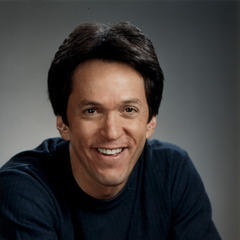
Author

Mitch Albom
Mitch Albom

Mitch Albom, born on May 23, 1958, is a renowned American author known for his profound exploration of themes such as life, faith, and love. His works, including 'Tuesdays with Morrie' and 'For One More Day', are celebrated for their emotional depth and rich character development. more

You May Also Like

“By now, the morning sun was just over the horizon and it came at me like a sidearm pitch between the houses of my old neighborhood. I shielded my eyes. This being early October, there were already piles of leaves pushed against the curb—more leaves than I remembered from my autumns here—andless open space in the sky. I think what you notice most when you haven’t been home in a while is how much the trees have grown around your memories.”

“It’s funny. I met a man once who did a lot of mountain climbing. I asked him which was harder, ascending or descending? He said without a doubt descending, because ascending you were so focused on reaching the top, you avoided mistakes. The backside of a mountain is a fight against human nature,” he said. “You have to care as much about yourself on the way down as you did on the way up.”

“I hope you never hear those words. Your mom. She died. They are different than other words. They are too big to fit in your ears. They belong to some strange, heavy, powerful language that pounds away at the side of your head, a wrecking ball coming at you again and again, until finally, the words crack a hole large enough to fit inside your brain. And in so doing, they split you apart.”

“And I was remembering that time in our lives together, the time of those ritual walks. I was remembering the way it feels at just that moment when you begin to turn, when you’re poised exactly between the things in life you want to do and those you need to do, and it seems for a few blessed seconds that they are all going to be the same.”

“And what if we’d been utterly open? Made jokes about the first wife? What if we’d been that kind of family? Well, I would have been different, surely. But not because I knew the secret. For it wasn’t the secret—the secret that wasn’t a secret anyway—that led to the austerity in our lives. It was the austerity that led to the secret. And what I had been marked by, probably most of all, was the austerity. It had made secrets in my life too. Or silences, anyway, that became secrets. That became lies.”

“But perhaps this is all to the good. Perhaps it’s best to live with the possibility that around any corner, at any time, may come the person who reminds you of your own capacity to surprise yourself, to put at risk everything that’s dear to you. Who reminds you of the distances we have to bridge to begin to know anything about one another. Who reminds you that what seems to be—even about yourself—may not be. That like him, you need to be forgiven.”

“I was eleven when my father left, so neither of us really knew our fathers. I’d met mine of course, but then I only knew my dad as a child knows a parent, as a sort of crude outline filled in with one or two colors. I’d never seen my father scared or cry. I’d never heard him admit to any wrongdoing. I have no idea what he dreamed of. And once I’d seen a smile pinned to one cheek and darkness to the other when my mum had yelled at him. Now he was gone, and I was left with just an impression—one of male warmth, big arms, and loud laughter.”