Quotessence
Home / Quotes / Quote by Leo Strauss

Quote by Leo Strauss

Work

Liberalism Ancient and Modern

This scholarly work delves into the evolution of liberal thought, tracing its roots in ancient civilizations and its subsequent development into modern political and social ideologies. more

Author
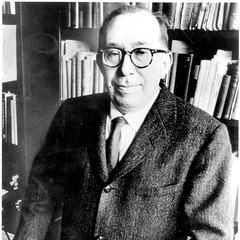
Leo Strauss
Leo Strauss

Leo Strauss was a prominent philosopher born on September 20, 1899, and died on October 18, 1973. His thoughts were deeply influenced by classical philosophy and German philosophy, especially by Martin Heidegger's philosophical ideas. Strauss's main contribution lies in his reinterpretation of political philosophy, emphasizing the close connection between political philosophy and moral philosophy. more

You May Also Like

“We somehow believe that our point of view is superior, higher than those of the greatest minds either because our point of view is that of our time, and our time, being later than the time of the greatest minds, can be presumed to be superior to their times; or else because we believe that each the greatest minds was right from his point of view, but not, as he claims, simply right.”

“Men are constantly attracted and deluded by two opposite charms: the charm of competence which is engendered by mathematics and everything akin to mathematics, and the charm of humble awe, which is engendered by meditation on the human soul and its experiences. Philosophy is characterized by the gentle, if firm, refusal to succumb to either charm.”

“According to our social science, we can be or become wise in all matters of secondary importance, but we have to be resigned to utter ignorance in the most important respect: we cannot have any knowledge regarding the ultimate principles of our choices, i.e. regarding their soundness or unsoundness... We are then in the position of beings who are sane and sober when engaged in trivial business and who gamble like madmen when confronted with serious issues.”

“Men must always have distinguished (e.g. in judicial matters) between hearsay and seeing with one's own eyes and have preferred what one has seen to what he has merely heard from others. But the use of this distinction was originally limited to particular or subordinate matters. As regards the most weighty matters the first things and the right way the only source of knowledge was hearsay.”

“The adjective "political" in "political philosophy" designates not so much the subject matter as a manner of treatment; from this point of view, I say, "political philosophy" means primarily not the philosophic study of politics, but the political, or popular, treatment of philosophy, or the political introduction to philosophy the attempt to lead qualified citizens, or rather their qualified sons, from the political life to the philosophic life.”

“Liberal education, which consists in the constant intercourse with the greatest minds, is a training in the highest form of modesty. ... It is at the same time a training in boldness. ... It demands from us the boldness implied in the resolve to regard the accepted views as mere opinions, or to regard the average opinions as extreme opinions which are at least as likely to be wrong as the most strange or least popular opinions”