“The kingdom of music is not the kingdom of this world; it will accept those whom breeding and intellect and culture have alike rejected. The commonplace person begins to play, and shoots into the empyrean without effort, whilst we look up, marvelling how he has escaped us, and thinking how we could worship him and love him, would he but translate his visions into human words, and his experiences into human actions. Perhaps he cannot; certainly he does not, or does so very seldom.”
Quote by E. M. Forster
Work
Great Novels of E. M. Forster: Where Angels Fear to Tread, The Longest Journey, A Room with a View, Howards End
This compilation brings together four of E. M. Forster's most renowned works, showcasing his skillful exploration of social dynamics and personal relationships. "Where Angels Fear to Tread" delves into the complexities of a British family's life in Italy. "The Longest Journey" follows a young man's quest for self-discovery. "A Room with a View" is a tale of romance and social reform in Edwardian England. "Howards End" intertwines the lives of three families, examining themes of class and individualism. more
Author
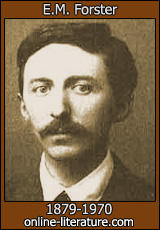
E. M. Forster
E. M. Forster was an English novelist known for his modernist works. His most famous novel, 'A Passage to India', delves into themes of colonialism and the intricacies of human relationships. Forster's writing is renowned for its wit, irony, and philosophical depth. more
You May Also Like
“If you knew how much work went into it, you wouldn't call it genius.”
“Take away love and our earth is a tomb.”
Source: MEN AND WOMEN Songs of love and life
“There are no simple words. I don't know why I thought I could hide anything behind language.”
Source: The Judges: A Novel
Source: The Manual of Detection: A Novel
Source: Pedagogy of the Oppressed: 30th Anniversary Edition