“Ignorance is mere privation by which nothing can be produced: it is a vacuity in which the soul sits motionless and torpid for want of attraction: and, without knowing why, we always rejoice when we learn, and grieve when we forget.”
Quote by Samuel Johnson
Work
Rasselas, prince of Abyssinia
Rasselas, prince of Abyssinia is a philosophical novel that delves into the search for happiness and the quest for knowledge. The story follows the prince's journey through various experiences and encounters, as he seeks to understand the meaning of life and the purpose of human existence. more
Author
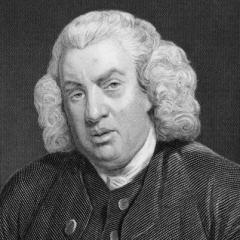
Samuel Johnson
Samuel Johnson was an English writer, poet, and lexicographer, renowned for his comprehensive English dictionary, 'A Dictionary of the English Language', published in 1755. His distinctive writing style and wit have cemented his place as a significant figure in the history of English literature. more
You May Also Like
Source: Nietzsche: Philosopher, Psychologist, Antichrist
Source: On the Genealogy of Morals and Ecce Homo
“Great parts produce great vices as well as virtues.”
Source: Wit and Wisdom of Socrates, Plato, Aristotle: Being a Treasury of Thousands of Glorious, Inspiring and Imperishable Thoughts, Views and Observations of the Three Great Greek Philosophers, Classified Under about Four Hundred Subjects for Comparative Study
“Integrity is your destiny-it is the light that guides your way.”