“In sum, all actions and habits are to be esteemed good or evil by their causes and usefulness in reference to the commonwealth, and not by their mediocrity, nor by their being commended. For several men praise several customs, and, contrarily, what one calls vice, another calls virtue, as their present affections lead them.”
Quote by Thomas Hobbes
Work
Behemoth or The Long Parliament
Behemoth or The Long Parliament is a work by the English philosopher Thomas Hobbes, composed in the late 1660s and published posthumously. Presented as a series of dialogues between two characters, the book offers a critical analysis of the political and religious conflicts that led to the English Civil War and the rule of the Long Parliament. Hobbes uses this historical narrative to illustrate his broader political theories, particularly his views on sovereignty, rebellion, and the dangers of divided authority. The text is notable for its stark, often pessimistic perspective on the events and figures of the period, reflecting Hobbes's belief in the necessity of absolute sovereign power to maintain civil order. more
Author
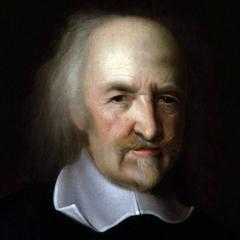
Thomas Hobbes
Thomas Hobbes, a British philosopher, politician, historian, economist, and writer, was born on April 5, 1588, in Wiltshire, and died on December 4, 1679, in Oxford, England. Hobbes is considered one of the most important philosophers of the 17th century, known for his profound analysis of the state, society, and human behavior. more
You May Also Like
Source: The Essential Leviathan: A Modernized Edition
Source: Of Liberty and Necessity; a treatise, wherein all controversy concerning predestination, election, free will, grace, merits, reprobation, etc. is fully decided and cleared. New edition
Source: The Ethics of Hobbes: As Contained in Selections from His Works
Source: Leviathan, Parts I and II - Revised Edition
Source: A Miscellany, Containing Several Tracts on Various Subjects
Source: Works: Account of His Life and Letters
Source: The Works of George Berkeley, D.D., Formerly Bishop of Cloyne: Philosophical works, 1732-33: Alciphron. The theory of vision
Source: Alciphron: Or, The Minute Philosopher. In Seven Dialogues Containing an Apology for the Christian Religion Against Those who are Called Free-thinkers
Source: Philosophical works