Quotessence
Home / Quotes / Quote by Horace Bushnell

Quote by Horace Bushnell

Work

Nature and the Supernatural

This book delves into the intersection of science and the supernatural, examining various phenomena that challenge conventional understanding of nature. more

Author
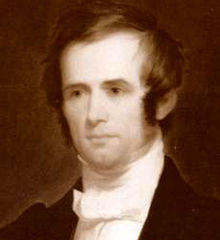
Horace Bushnell
Horace Bushnell

Horace Bushnell was an American religious leader and theologian, born on April 14, 1802, and died on February 17, 1876. He had a profound impact on the fields of religion and theology, particularly in the areas of Christian ethics and religious education. more

You May Also Like

“Only a people serving an apprenticeship to nature can be trusted with machines. Only such people will so contrive and control those machines that their products are an enhancement of biological needs, and not a denial of them.”

“Our problem is that the climate crisis hatched in our laps at a moment in history when political and social conditions were uniquely hostile to a problem of this nature and magnitude-that moment being the tail end of the go-go '80s, the blastoff point for the crusade to spread deregulated capitalism around the world. Climate change is a collective problem demanding collective action the likes of which humanity has never actually accomplished. Yet it entered mainstream consciousness in the midst of an ideological war being waged on the very idea of the collective sphere.”

“The world, nature, human beings, do not move like machines. The edges are never clear-cut, but always frayed. Nature never draws a line without smudging it.”

“On the most usual assumption, the universe is homogeneous on the large scale, i.e. down to regions containing each an appreciable number of nebulae. The homogeneity assumption may then be put in the form: An observer situated in a nebula and moving with the nebula will observe the same properties of the universe as any other similarly situated observer at any time.”

“The Synthesis consists in assuming the Causes discovered and established as Principles, and by them explaining the Phænomena proceeding from them, and proving the Explanations.”

“To derive two or three general Principles of Motion from Phænomena, and afterwards to tell us how the Properties and Actions of all corporeal Things follow from those manifest Principles, would be a very great step in Philosophy.”