Quotessence
Home / Quotes / Quote by Corliss Lamont

Quote by Corliss Lamont

“Since Humanism as a functioning credo is so closely bound up with the methods of reason and science, plainly free speech and democracy are its very lifeblood. For reason and scientific method can flourish only in an atmosphere of civil liberties.”

Quote by Corliss Lamont

Author
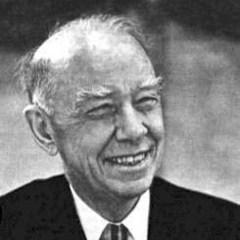
Corliss Lamont
Corliss Lamont

Corliss Lamont (1902-1995) was an American philosopher, humanist, and peace activist who taught at Columbia University for decades. He was a prominent figure in the American humanist movement and a dedicated advocate for socialism and world peace. His seminal work "The Philosophy of Humanism" became a foundational text in the humanist movement, influencing generations of thinkers and activists committed to human reason and ethical progress. more

You May Also Like

“The values of science and the values of democracy are concordant, in many cases indistinguishable. Science and democracy began - in their civilized incarnations - in the same time and place, Greece in the seventh and sixth centuries B.C. . . . Science thrives on, indeed requires, the free exchange of ideas; its values are antithetical to secrecy. Science holds to no special vantage points or privileged positions. Both science and democracy encourage unconventional opinions and vigorous debate. Both demand adequate reason, coherent argument, rigorous standards of evidence and honesty.”

“One thing is certain: you will find plenty of worthwhile things to do. You will not be bored, or lack fulfillment in your life. Most important of all, you will know that you have not lived and died for nothing, because you will have become part of the great tradition of those who have responded to the amount of pain and suffering in the universe by trying to make the world a better place.”

“Why continue? Because we must. Because we have the call. Because it is nobler to fight for rationality without winning than to give up in the face of continued defeats. Because whatever true progress humanity makes is through the rationality of the occasional individual and because any one individual we may win for the cause may do more for humanity than a hundred thousand who hug their superstitions to their breast.”

“On religion in particular, the time appears to me to have come, when it is a duty of all who, being qualified in point of knowledge, have, on mature consideration, satisfied themselves that the current opinions are not only false, but hurtful, to make their dissent known.”

“What can you or I do? Alone, almost nothing. Yet one person - you alone - can make the difference. . . . The failure of just one person to join, to participate, to do whatever he or she can - your failure or my failure - may mean that there is just one too few to win the fight for sanity, and so leave the world on the road to destruction. Each of us, all of us, must do what we can.”