Quotessence
Home / Quotes / Quote by James Pollard Espy

Quote by James Pollard Espy

“The astronomer is, in some measure, independent of his fellow astronomer; he can wait in his observatory till the star he wishes to observe comes to his meridian; but the meteorologist has his observations bounded by a very limited horizon, and can do little without the aid of numerous observers furnishing him contemporaneous observations over a wide-extended area.”

Quote by James Pollard Espy

Work

Message from the President of the United States: Communicating, in Compliance with a Resolution of the Senate of July 24, 1854, the Fourth Meteorological Report of Prof. James P. Espy

Published in 1854, this volume contains detailed meteorological reports by James P. Espy, a prominent scientist of his time. The reports are a compilation of weather observations and analyses, offering insights into the state of meteorology during the mid-19th century. The book is a significant historical document, providing a glimpse into the early days of meteorological research and its application to public policy. more

Author
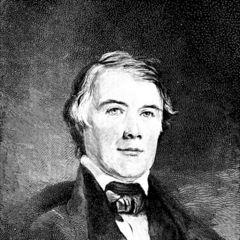
James Pollard Espy
James Pollard Espy

James Pollard Espy (May 9, 1785 - January 24, 1860) was an American scientist known for his contributions to meteorology and geography. Espy was recognized for his work in cartography and meteorological observations. more

You May Also Like

“These neutrino observations are so exciting and significant that I think we're about to see the birth of an entirely new branch of astronomy: neutrino astronomy. Supernova explosions that are invisible to us because of dust clouds may occur in our galaxy as often as once every 10 years, and neutrino bursts could give us a way to study them.”

“What has been done is little-scarcely a beginning; yet it is much in comparison with the total blank of a century past. And our knowledge will, we are easily persuaded, appear in turn the merest ignorance to those who come after us. Yet it is not to be despised, since by it we reach up groping to touch the hem of the garment of the Most High.”

“Without any doubt, the regularity which astronomy shows us in the movements of the comets takes place in all phenomena. The trajectory of a simple molecule of air or vapour is regulated in a manner as certain as that of the planetary orbits; the only difference between them is that which is contributed by our ignorance. Probability is relative in part to this ignorance, and in part to our knowledge.”

“[At high school in Cape Town] my interests outside my academic work were debating, tennis, and to a lesser extent, acting. I became intensely interested in astronomy and devoured the popular works of astronomers such as Sir Arthur Eddington and Sir James Jeans, from which I learnt that a knowledge of mathematics and physics was essential to the pursuit of astronomy. This increased my fondness for those subjects.”

“Posterity is the world to come; the world for whom we hold our ideals, from whom we have borrowed our planet, and to whom we bear sacred responsibility. We must do what America does best: offer more opportunity to all and demand responsibility from all.”

“However, on many occasions, I examined normal blood and normal tissues and there was no possibility of overlooking bacteria or confusing them with granular masses of equal size. I never found organisms. Thus, I conclude that bacteria do not occur in healthy human or animal tissues.”

“It has occurred to me that possibly the white corpuscles may have the office of picking up and digesting bacterial organisms when by any means they find their way into the blood. The propensity exhibited by the leukocytes for picking up inorganic granules is well known, and that they may be able not only to pick up but to assimilate, and so dispose of, the bacteria which come in their way does not seem to me very improbable in view of the fact that amoebae, which resemble them so closely, feed upon bacteria and similar organisms.”