“Now ... that you are going to marry, do not expect more from life, than life will afford.”
Quote by Samuel Johnson
Work
The Table Talk of Dr. Johnson: Comprising Opinions and Anecdotes of Life and Literature, Men, Manners, and Morals
This book presents a compilation of Samuel Johnson's thoughts and anecdotes, offering insights into the 18th-century English society, including discussions on literature, men, manners, and morals. more
Author
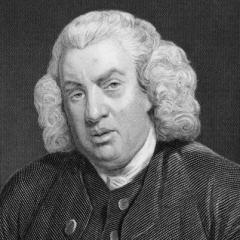
Samuel Johnson
Samuel Johnson was an English writer, poet, and lexicographer, renowned for his comprehensive English dictionary, 'A Dictionary of the English Language', published in 1755. His distinctive writing style and wit have cemented his place as a significant figure in the history of English literature. more
You May Also Like
Source: The life of Samuel Johnson, LL. D., comprehending an account of his studies, and numerous works, in chronological order: a series of his epistolary correspondence and conversations with many eminent persons; and various original pieces of his composition, never before published; the whole exhibiting a view of literature and literary men in Great Britain, for near half a century during which he flourished
Source: The Complete Works of Ralph Waldo Emerson: Comprising His Essays, Lectures, Poems, and Orations
Source: The Works of Ralph Waldo Emerson: Comprising His Essays, Lectures, Poems, and Orations
Source: Delphi Complete Works of Ralph Waldo Emerson (Illustrated)
Source: The Collected Works of Ralph Waldo Emerson: Representative men: seven lectures
Source: Delphi Complete Works of Ralph Waldo Emerson (Illustrated)
Source: The Collected Works of Ralph Waldo Emerson: Society and solitude
Source: The Prose Works of Ralph Waldo Emerson: Representative men. English traits. Conduct of life
Source: The Annotated Emerson