Quotessence
Home / Quotes / Quote by Chuck Klosterman

Quote by Chuck Klosterman

“In the eight years I worked at newspapers, even during a little stretch when I was a film critic, I was never, ever doing exclusively criticism. In the daily newspaper world, much more value is placed on reporting than on thinking abstractly about art. The eight years I was in newspapers, I was mainly a journalist in the conventional sense, and just doing criticism when there were opportunities.”

Quote by Chuck Klosterman

Author
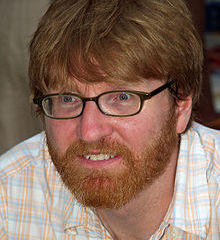
Chuck Klosterman
Chuck Klosterman

Chuck Klosterman is an American author born on June 5, 1972. Known for his unique perspective and humorous writing style, he has explored a wide range of subjects including popular culture, music, sports, and film, winning the admiration of readers with his work. more

You May Also Like

“A lot of people involved with celebrity journalism have interesting ideas about the people they want to write about going into the interview. Then as soon as they actually sit down with that person, they basically ask the questions they think journalists are supposed to ask, and they start viewing themselves almost as a peer of the subject. Like they're going to become friends. That's why most celebrity journalism is so terrible.”

“The problem a lot of writers have is that they really enjoy people saying, "You're brilliant." They let their self-perception be dictated by reader response. But if you're going to let other people make you feel good, you're going to end up feeling bad when they say the opposite. You've got to be a cultural stoic. Then you won't be devastated by people who respond negatively. Of course, the downside is that it sort of stops you from being able to enjoy people liking your work.”

“I think people feel very comfortable reviewing the idea of me, as opposed to what I've actually written. Most of the time, when people write about one of my books, they're really just writing about what they think I may or may not represent, as sort of this abstract entity. Is that unfair? Not really. If I put myself in this position where I'm going to kind of weave elements of memoir into almost everything, well, I suppose that's going to happen.”

“The people who review my books, generally, are kind of youngish culture writers who aspire to write books. When someone writes a book review, they obviously already self-identify as a writer. I mean, they are. They're writers, they're critics, and they're writing about a book about a writer who's a critic. So I think it's really hard for people to distance themselves from what they're criticizing.”

“I've written arrangements for choirs and strings in the past, but I usually write music with my voice or a keyboard and then I'll get someone who is good at writing scores to write it out. Or, if I have the luxury of time, I will go in a room and hear the people perform and then change it through what I hear, not on paper. I can read music OK, but I probably rebelled a little - music changes into something else when you read it.”

“When you get an idea, so many things come in that one moment. You could write the sound of that idea, or the sound of the room it's in. You could write the clothes the character is wearing, what they're saying, how they move, what they look like. Instead of making up, you're actually catching an idea, for a story, characters, place, and mood - all the stuff that comes. When you put a sound to something and it's wrong, it's so obvious. When it's right, the whole is greater than the sum of the parts. That's a magical thing that can happen in cinema.”

“Transcendental meditation is like a car, a vehicle that allows you to go within. It's a mental technique. You're given a mantra - the mantra that Maharishi gives is very specific, and you start to dive into subtler levels of mind, subtler levels of intellect. You transcend the whole show, into pure bliss consciousness. From your first meditation, you say, "Whoa!" It's a unique experience, but a familiar experience.”