“He who is permitted by law to have no property of his own, can with difficulty conceive that property is founded in anything but force.”
Quote by Thomas Jefferson
Work
The Works of Thomas Jefferson: Correspondence 1786-1787
This volume compiles the correspondence of Thomas Jefferson from the years 1786 and 1787, a period when he served as the United States minister to France. The letters document his diplomatic efforts, observations on European affairs, and exchanges with notable figures of the American founding era. The correspondence also touches on his personal interests, including architecture, agriculture, and philosophy, providing insight into his intellectual life and the early political landscape of the United States. more
Author
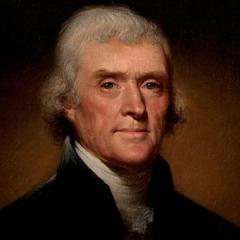
Thomas Jefferson
Thomas Jefferson was the third President of the United States, a distinguished politician, philosopher, architect, and scientist. He was born on April 13, 1743, and died on July 4, 1826. Jefferson advocated for democracy and freedom in politics and was one of the main authors of the Declaration of Independence. His political ideas had a profound impact on the founding and development of the United States. more
You May Also Like
“[Property] embraces everything to which a man may attach a value and have a right.”
Source: 1829-1836
“A little matter will move a party, but it must be something great that moves a nation.”
Source: The Rights of Man: With a Brief Historical Preface
“Public opinion sets bounds to every government, and is the real sovereign in every free one.”
Source: 1829-1836
Source: 1769-1793
Source: The writings of Thomas Jefferson
Source: The writings of George Washington