Quotessence
Home / Quotes / Quote by Ai Weiwei

Quote by Ai Weiwei

“I never felt like a Chinese citizen because I was pushed away at a very young age. My father, a writer, was a national enemy of the Communist Party. He was forbidden to write for 20 years. We literally lived underground. We dug a hole and lived there for years. My father cleaned public toilets, even though he was a highly respected poet. Nationality and borders are barriers to our intelligence, to our imagination and to all kinds of possibilities.”
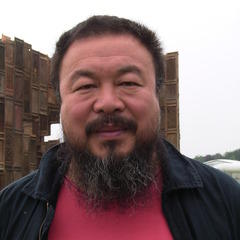
Quote by Ai Weiwei

Author

Ai Weiwei
Ai Weiwei

Browse famous quotes and profile details for Ai Weiwei. more

You May Also Like

“Nationality started as something natural, but we should not be restrained by the old politics that make up these clear lines. It should have its own way of evolving. In some places, it will evolve slower and in others, faster. It's like the mountains, the ocean and the rivers. It has its own geological forms. Societies cannot be flat. But during change, human rights, human dignity and free speech have to be protected. Otherwise, we'll be going backward.”

“Now I've come to such a mixed culture: America, Europe, South America, Africa. And the politics are changing everywhere all the time and becoming even more unpredictable. There's no such thing as "fixed" culture. China is also becoming more global. Its problems are becoming international problems, becoming German problems, becoming American problems. Nothing is clear-cut. Perhaps I'll find my way - or get totally lost.”

“What's hard to do is describe why you like something. Because ultimately, the reason things move people is very amorphous. You can be cerebral about things you hate, but most of the things you like tend to be very emotive. It's really hard to do a literary reproduction of what makes you happy. That's what I try to do. If nothing else, it seems like there's enough people out there telling the world what isn't cool, or what's terrible, or what's depressing. I think there's an element of cynicism in my writing, but I'm an optimistic cynic.”

“In the eight years I worked at newspapers, even during a little stretch when I was a film critic, I was never, ever doing exclusively criticism. In the daily newspaper world, much more value is placed on reporting than on thinking abstractly about art. The eight years I was in newspapers, I was mainly a journalist in the conventional sense, and just doing criticism when there were opportunities.”

“A lot of people involved with celebrity journalism have interesting ideas about the people they want to write about going into the interview. Then as soon as they actually sit down with that person, they basically ask the questions they think journalists are supposed to ask, and they start viewing themselves almost as a peer of the subject. Like they're going to become friends. That's why most celebrity journalism is so terrible.”