Quotessence
Home / Quotes / Quote by Lyndon B. Johnson

Quote by Lyndon B. Johnson

Work

Public Papers of the Presidents of the United States: Lyndon B. Johnson, 1965

The book serves as a comprehensive archive of the official documents and remarks made by President Lyndon B. Johnson during his term in office, providing insight into his administration's policies and priorities. more

Author
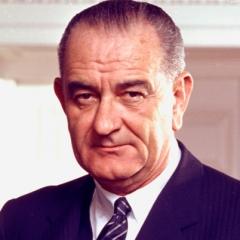
Lyndon B. Johnson
Lyndon B. Johnson

Lyndon B. Johnson, the 36th President of the United States, served from 1963 to 1969. He assumed the presidency following the assassination of John F. Kennedy and is known for his 'Great Society' programs aimed at reducing poverty and racial injustice. more

You May Also Like

“A Montana statue holds that a river has a right to overwhelm its banks and inundate its floodplain. Well, that's interesting, because it's not a right that we assign to the river. The river has earned it through centuries of deluging and shaping the floodplain, and the floodplain has a right to its rampaging river. They've earned their rights through a kind of reciprocal action.”

“I sat there and forgot and forgot, until what remained was the river that went by and I who watched. On the river the heat mirages danced with each other and then they danced through each other and then they joined hands and danced around each other. Eventually the water joined the river, and there was only one of us. I believe it was the river.”

“Can we afford clean water? Can we afford rivers and lakes and streams and oceans which continue to make possible life on this planet? Can we afford life itself? Those questions were never asked as we destroyed the waters of our nation, and they deserve no answers as we finally move to restore and renew them. These questions answer themselves.”

“It's hard to see a river all at once, especially in the mountains. Down on the plains, rivers run in their course as straightforward as time, channeled toward the sea. But up in the headwaters, a river isn't a point where you stand. In the beginnings of the river, you teeter on the edge of a hundred tiny watersheds where one drop of water is always tipping the balance from one stream to another. History changes with each tiny event, shaping an outcome that we can only fully grasp in hindsight. And that view changes as we move farther downstream.”