Quotessence
Home / Quotes / Quote by Nathaniel Hawthorne

Quote by Nathaniel Hawthorne

“Technologies of easy travel "give us wings; they annihilate the toil and dust of pilgrimage; they spiritualize travel! Transition being so facile, what can be any man's inducement to tarry in one spot? Why, therefore, should he build a more cumbrous habitation than can readily be carried off with him? Why should he make himself a prisoner for life in brick, and stone, and old worm-eaten timber, when he may just as easily dwell, in one sense, nowhere,-in a better sense, wherever the fit and beautiful shall offer him a home?”

Quote by Nathaniel Hawthorne

Author
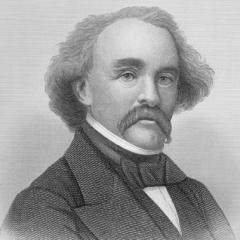
Nathaniel Hawthorne
Nathaniel Hawthorne

Nathaniel Hawthorne was an American novelist known for his Gothic novels and romantic works. His writings often delve into themes of morality and sin, influenced by his family history and Puritan background. more

You May Also Like

“I have my own way to walk and for some reason or other Zen is right in the middle of it wherever I go. So there it is, with all its beautiful purposelessness, and it has become very familiar to me though I do not know "what it is." Or even if it is an "it." Not to be foolish and multiply words, I'll say simply that it seems to me that Zen is the very atmosphere of the Gospels, and the Gospels are bursting with it. It is the proper climate for any monk, no matter what kind of monk he may be. If I could not breathe Zen I would probably die of spiritual asphyxiation.”

“We forget that we create the situations, then we give our power away by blaming the other person for our frustration. No person, no place, and no thing has any power over us, for “we” are the only thinkers in our mind. We create our experiences, our reality, and everyone in it. When we create peace and harmony and balance in our mind, we will find it in our lives.”

“As far as I know, the question of whether and how it could be strategically or morally justified was never the subject of open debate in Germany after 1945, no doubt mainly because a nation which had murdered and worked to death millions of people in its camps could hardly call on the victorious powers to explain the military and political logic that dictated the destruction of the German cities.”