Quotessence
Home / Quotes / Quote by Diane Abbott

Quote by Diane Abbott

“There are 101 websites out there for debate - this was a blatant last attempt to get someone to stand against Gordon Brown.”

Quote by Diane Abbott

Author
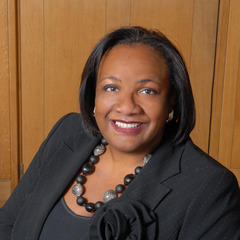
Diane Abbott
Diane Abbott

Diane Abbott is a British politician who has been serving as the Member of Parliament for Hackney North and Stoke Newington since 1987. She is a prominent figure in the Labour Party and has held various roles within the party, including serving as Shadow Minister for Higher Education and Shadow Minister for Public Health. more

You May Also Like

“For us democracy is a question of human dignity. And human dignity is political freedom, the right to freely express opinion and the right to be allowed to criticise and form opinions. Human dignity is the right to health, work, education and social welfare. Human dignity is the right and the practical possibility to shape the future with others. These rights, the rights of democracy, are not reserved for a select group within society, they are the rights of all the people.”

“What, after all, is the public under present conditions? What are the reasons for its eclipse? What hinders it from finding and identifying itself? By what means shall its inchoate and amorphous estate be organized into effective political action relevant to present social needs and opportunities? What has happened to the public in the century and a half since the theory of political democracy was urged with such assurance and hope?”

“What the public does is not to express its opinions but to align itself for or against a proposal. If that theory is accepted, we must abandon the notion that democratic government can be the direct expression of the will of the people. We must abandon the notion that the people govern. Instead, we must adopt the theory that, by their occasional mobilizations as a majority, people support or oppose the individuals who actually govern. We must say that the popular will does not direct continuously but that it intervenes occasionally.”

“No government by experts in which the masses do not have the chance to inform the experts as to their needs can be anything but an oligarchy managed in the interest of the few. And the enlightenment must proceed in ways which force the administrative specialists to take account of the needs. The world has suffered more from leaders and authorities than from the masses. The essential need ... is the improvement of the methods and conditions of debate, discussion and persuasion. That is the problem of the public.”