Quotessence
Home / Quotes / Quote by John Stuart Mill

Quote by John Stuart Mill

Work

On Liberty, Utilitarianism and Other Essays

This book is a compilation of essays that delve into the concepts of individual liberty, the ethical theory of utilitarianism, and broader moral philosophical considerations. The essays are known for their insightful analysis and contribution to the fields of ethics and political philosophy. more

Author
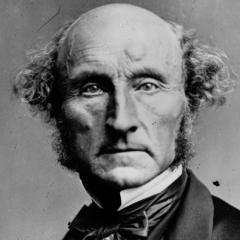
John Stuart Mill
John Stuart Mill

John Stuart Mill was an influential British philosopher, economist, and logician. He is one of the most important figures in 19th-century philosophy and his ideas had a profound impact on political, social, and philosophical thought of the time. more

You May Also Like

“No government by experts in which the masses do not have the chance to inform the experts as to their needs can be anything but an oligarchy managed in the interest of the few. And the enlightenment must proceed in ways which force the administrative specialists to take account of the needs. The world has suffered more from leaders and authorities than from the masses. The essential need ... is the improvement of the methods and conditions of debate, discussion and persuasion. That is the problem of the public.”

“Those who won our independence believed that the final end of the state was to make men free to develop their faculties... They valued liberty both as an end and as a means. They believed liberty to be the secret of happiness and courage to be the secret of liberty... that public discussion is a political duty; and that this should be a fundamental principle of the American government.”

“The best defence [for a democracy, for the public good] is aggressiveness, the aggressiveness of the involved citizen. We need to reassert that slow, time-consuming, inefficient, boring process that requires our involvement; it is called 'being a citizen.' The public good is not something that you can see. It is not static. It is a process. It is the process by which democratic civilizations build themselves.”

“At the heart of the WTO is an assault on everything left standing in the commons, in the public realm. Everything is now for sale. Even those areas of life that we once considered sacred like health and education, food and water and air and seeds and genes and a heritage. It is all now for sale. Economic freedom - not democracy, and not ecological stewardship - is the defining metaphor of the WTO and its central goal is humanity's mastery of the natural world through its total commodification.”