Quotessence
Home / Quotes / Quote by Nigel Rees

Quote by Nigel Rees

Author

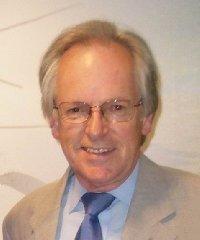
Nigel Rees
Nigel Rees

Nigel Rees is a British writer born on June 5, 1944. Known for his unique literary criticism and radio programs, Rees has gained popularity for his in-depth and accessible analysis of classic works. more

You May Also Like

“The best defence [for a democracy, for the public good] is aggressiveness, the aggressiveness of the involved citizen. We need to reassert that slow, time-consuming, inefficient, boring process that requires our involvement; it is called 'being a citizen.' The public good is not something that you can see. It is not static. It is a process. It is the process by which democratic civilizations build themselves.”

“At the heart of the WTO is an assault on everything left standing in the commons, in the public realm. Everything is now for sale. Even those areas of life that we once considered sacred like health and education, food and water and air and seeds and genes and a heritage. It is all now for sale. Economic freedom - not democracy, and not ecological stewardship - is the defining metaphor of the WTO and its central goal is humanity's mastery of the natural world through its total commodification.”

“There can be no real growth without healthy populations. No sustainable development without tackling disease and malnutrition. No international security without assisting crisis-ridden countries. And no hope for the spread of freedom, democracy and human dignity unless we treat health as a basic human right.”

“One function of the librarian, as he saw it, was to blunt the edge of these differences and to provide a means whereby the rich and poor could live happily side by side. The public library was a great leveler, supplying a literature by which the ordinary man could experience some of the pleasures of the rich, and providing a common ground where employer and employee could meet on equal terms.”

“Contemporary political theorists continue this type of thinking about democracy by arguing that the development of "public judgment" among regular citizens should be made the central concern of modern politics. Public judgment, in the words of Benjamin Barber, is a function of commonality that can be exercised only by citizens interacting with one another in the context of mutual deliberation and decision.”

“A democratic public forms when citizens gather together to deliberate and make public judgments about local and national issues that affect their lives. By associating together for public discussion, citizens learn the skills necessary for the health of a democratic public; listening persuading, arguing, compromising, and seeking common ground. When these skills are nurtured within the institutions of a democratic public, citizens educate themselves in order to make informed political decisions.”