Quotessence
Home / Quotes / Quote by John Quincy Adams

Quote by John Quincy Adams

Work

John Quincy Adams and American continental empire: letters, papers and speeches

John Quincy Adams and American Continental Empire: Letters, Papers and Speeches is a comprehensive collection that showcases the writings of John Quincy Adams, highlighting his contributions to the development of the American Continental Empire. The book includes a variety of documents, providing insight into Adams' political thought and actions during his tenure in public office. more

Author
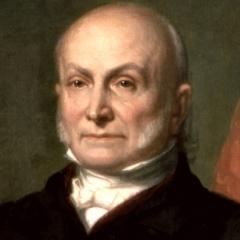
John Quincy Adams
John Quincy Adams

John Quincy Adams was the 6th President of the United States, born on July 11, 1767, and died on February 28, 1848. He was a prominent statesman, diplomat, and scholar, known for his extensive knowledge and political experience. more

You May Also Like

“We have counted the cost of this contest, and find nothing so dreadful as voluntary slavery.-Honor, justice, and humanity, forbid us tamely to surrender that freedom which we received from our gallant ancestors, and which our innocent posterity have a right to receive from us. We cannot endure the infamy and guilt of resigning succeeding generations to that wretchedness which inevitably awaits them, if we basely entail hereditary bondage upon them.”

“In proportion to the value of this revolution; in proportion to the importance of instruments, every word of which decides a question between power and liberty; in proportion to the solemnity of acts, proclaiming the will authenticated by the seal of the people, the only earthly source of authority, ought to be the vigilance with which they are guarded by every citizen in private life, and the circumspection with which they are executed by every citizen in public trust.”

“As compacts, charters of government are superior in obligation to all others, because they give effect to all others. As truths, none can be more sacred, because they are bound, on the conscience by the religious sanctions of an oath. As metes and bounds of government, they transcend all other land-marks, because every public usurpation is an encroachment on the private right, not of one, but of all.”

“MORAL LAW, Evidence of.- Man has been subjected by his Creator to the moral law, of which his feelings, or conscience as it is sometimes called, are the evidence with which his Creator has furnished him. ... The moral duties which exist between individual and individual in a state of nature, accompany them into a state of society ... their Maker not having released them from those duties on their forming themselves into a nation.”

“Just and true liberty, equal and impartial liberty, in matters spiritual and temporal is a thing that all men are clearly entitled to by the eternal and immutable laws of God and nature, as well as by the laws of nations and all well-grounded and municipal laws, which must have their foundation in the former.”

“It is our duty to endeavor always to promote the general good; to do to all as we would be willing to be done by were we in their circumstances; to do justly, to love mercy, and to walk humbly before God. These are some of the laws of nature which every man in the world is bound to observe, and which whoever violates exposes himself to the resentment of mankind, the lashes of his own conscience, and the judgment of Heaven. This plainly shows that the highest state of liberty subjects us to the law of nature and the government of God.”

“What constitutes the bulwark of our own liberty and independence? It is not our frowning battlements, our bristling sea coasts, our army and our navy... Our reliance is in the love of liberty which God has planted in us. Our defense is in the spirit which prizes liberty as the heritage of all men, in all lands everywhere. Destroy this spirit and you have planted the seeds of despotism at your own doors... You have lost the genius of your own independence and become the fit subjects of the first cunning tyrant who rises among you.”