Quotessence
Home / Quotes / Quote by Sergio Chejfec

Quote by Sergio Chejfec

“I find that, for me, it is this concept of borrowed or built life, life on loan, that gets me writing. It's similar to speaking about literature. I like it, and then I don't like it. It has such an inherent vein of pretention, because you're not speaking about real things. There's a literary pretentiousness made of speaking and spending so much time on unreal persons. And it seems, now, impossible to create an unpretentious, totally organic character.”

Quote by Sergio Chejfec

Author
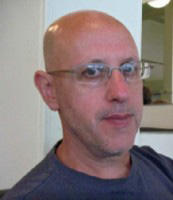
Sergio Chejfec
Sergio Chejfec

Sergio Chejfec, born in 1956, is an Argentine writer known for his profound philosophical reflections and unique narrative style. His works are widely regarded as significant representatives of contemporary Latin American literature. more

You May Also Like

“For me, it's a way to find a fiction within a fiction. To find a way to uncover that blunder within the "lie," because when you look closer, every "lie" - and I say that with quotation marks - can be much more complicated. Because that is what fiction is: it's probably the least important thing in the world. It's rich, but it is put-on, it passes the time. It borrows from the world, but it does not invent it.”

“In the early days of the Internet, the word "navigation" had this ingrained in it. There really was a sensation of the cyber-flâneur, as you really would have no idea where you would end up. You would end up on pages that had nothing to do with what you wanted, experiences that were totally unanticipated. You had to connect the dots, connect the parcels of your experience. It was totally open to randomness.”

“I like to compare the first experiences of the Internet - the fortuitousness, the chance - with reality, with the experience, for example, of being in a city that you don't know. Many times - and I don't know if I can totally defend this argument - I've found that the way one experiences the world, and daily life, we are constantly dealing with these perceptions. And it seems like it works, this superficial perception of determinacy, but it's completely ridiculous.”

“Nostalgia for people, cultures, everything. There's an ability to use these marks to note things that are erased, deleted. Traces are a species of history, of evidence. It's a way for the way the narrator to construct a semblance of self, even though all of this creates a deception, a way to think of one's traces as a real way to define oneself. The trace is fallible, impermanent. It's one of the motives I had in mind throughout the text.”