“No man complains of his neighbor for ill management of his affairs, for an error in sowing his land, or marrying his daughter, for consuming his substance in taverns ... in all these he has liberty; but if he does not frequent the church, or then conform in ceremonies, there is an immediate uproar.”
Quote by Thomas Jefferson
Author
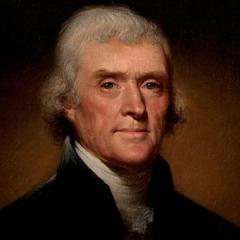
Thomas Jefferson
Thomas Jefferson was the third President of the United States, a distinguished politician, philosopher, architect, and scientist. He was born on April 13, 1743, and died on July 4, 1826. Jefferson advocated for democracy and freedom in politics and was one of the main authors of the Declaration of Independence. His political ideas had a profound impact on the founding and development of the United States. more
You May Also Like
Source: The writings of Thomas Jefferson
Source: The Works of Thomas Jefferson: Correspondence 1771 - 1779, the Summary View, and the Declaration of Independence
Source: The portable Thomas Jefferson
Source: Jefferson: Writings
“Revelation, indeed, as such had no influence on my mind”
Source: Works of the late Dr. Benjamin Franklin: consisting of his life, written by himself : together with essays, humourous, moral & literary, chiefly in the manner of the Spectator : in two volumes
Source: Maxims of George Washington: Political, Military, Social, Moral, and Religious