“It is generally allowed, that no man ever found the happiness of possession proportionate to that expectation which incited his desire, and invigorated his pursuit; nor has any man found the evils of life so formidable in reality, as they were described to him by his own imagination; every species of distress brings with it some peculiar supports, some unforeseen means of resisting, or powers of enduring.”
Quote by Samuel Johnson
Work
The Wisdom of the Rambler, Adventurer, and Idler
This book delves into the profound insights gained from the experiences of rambling, adventuring, and idling, offering a unique perspective on the value of these activities in personal growth and understanding of the world. more
Author
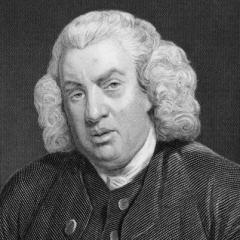
Samuel Johnson
Samuel Johnson was an English writer, poet, and lexicographer, renowned for his comprehensive English dictionary, 'A Dictionary of the English Language', published in 1755. His distinctive writing style and wit have cemented his place as a significant figure in the history of English literature. more
You May Also Like
Source: The prose works of Alexander Pope: The major works, 1725-1744
“Ale is meat, drink and cloth; it will make a cat speak and a wise man dumb.”
Source: The works of Jonathan Swift ...: with copious notes and additions, and a memoir of the author
Source: The Miscellaneous Works of Oliver Goldsmith: With an Account of His Life and Writings : Stereotyped from the Paris Edition : Complete in One Volume
“I have often regretted what I have eaten, but never what I have drunk.”
Source: The End of Imagination
Source: The Collected Works of C. G. Jung
“Whatever fosters the growth of civilization works at the same time against war.”
Source: The standard edition of the complete psychological works of Sigmund Freud