Quotessence
Home / Quotes / Quote by Markus Zusak

Quote by Markus Zusak

“... none of them had it. They had no qualms about stealing, but they needed to be told. They liked to be told, and Viktor Chemmel liked to be the teller. It was a nice microcosm.”

Quote by Markus Zusak

Work

The Book Thief

This novel is a poignant story of survival and the power of literature. Narrated by Death, it follows the life of Liesel Meminger, a girl who is sent to live with a German family during the tumultuous years of World War II. Liesel becomes deeply involved with her foster family, learning to read and write, and finding solace in books amidst the chaos of the war. The story explores themes of love, loss, and the human spirit in the face of adversity. more
Author

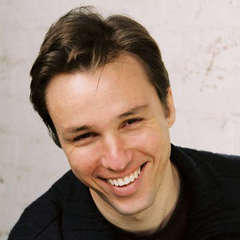
Markus Zusak
Markus Zusak

Markus Zusak, born on June 23, 1975, is an acclaimed Australian author known for his unique narrative style and profound thematic insights. His works have garnered widespread praise from readers and critics alike. more

You May Also Like

“The downside of attending to the emotional life of groups is that it can swamp the ability to get anything done; a group can become more concerned with satisfying its members than with achieving its goals. Bion identified several ways that groups can slide into pure emotion - they can become "groups for pairing off," in which members are mainly interested in forming romantic couples or discussing those who form them; they can become dedicated to venerating something, continually praising the object of their affection (fan groups often have this characteristic, be they Harry Potter readers or followers of the Arsenal soccer team), or they can focus too much on real or perceived external threats. Bion trenchantly observed that because external enemies are such spurs to group solidarity, some groups will anoint paranoid leaders because such people are expert at identifying external threats, thus generating pleasurable group solidarity even when the threats aren't real.”

“Kahan devised a theory he calls “identity-protective cognition,” suggesting that when forced to choose between factual truth and group identity, most people choose the latter. “Individuals,” he concluded, “subconsciously resist factual information that threatens their defining values.” The problem wasn’t that people are dumb, irrational, or even superficial, as I’d formerly assumed. We’ve simply evolved—as a species—in a different way than I’d imagined. “Once group loyalties are engaged,” Haidt says, “you can’t change people’s mind by refuting their arguments.”

“There was a risk in theorizing. I had witnessed, close up, the fatal, comic effect upon professors and students of hypotheses which had become unconscious convictions. And thus warned, I had thrown overboard, as a reporter facing facts, many of my college-bred notions . . . It was hard to do; ideas harden like arteries; indeed, one theory of mine is that convictions are identical with hardened arteries. But the facts . . . forced me to drop my academic theories one by one; and my reward was the discovery that it was as pleasant to change one’s mind as it was to change one’s clothes. The practice led one to other, more fascinating—theories.”