Quotessence
Home / Quotes / Quote by Janet Fitch

Quote by Janet Fitch

Work

White Oleander

White Oleander is a work of fiction that follows the life of Astrid Magnussen, a girl whose mother, Ingrid, is a brilliant but narcissistic poet. After Ingrid is sentenced to prison for murder, Astrid is placed into a series of foster homes across Southern California. Each home presents a different set of challenges and influences, shaping Astrid's identity as she grows from a child into a young woman. The narrative explores themes of resilience, the search for belonging, and the powerful, often destructive, bond between mother and daughter. The title refers to a poisonous flowering shrub, serving as a metaphor for Ingrid's beautiful yet dangerous influence on her daughter's life. more
Author

Janet Fitch
Janet Fitch

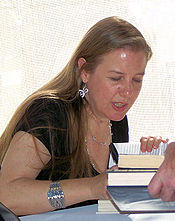
Janet Fitch is a renowned American contemporary author, born on November 9, 1955, in California. Her works are known for their profound character development and unique narrative style, with notable titles including 'The Geeks' and 'Paint It Black'. more

You May Also Like

“Usually, to be sure, man considers only the stubble field of transitoriness and overlooks the full granaries of the past, wherein he had salvaged once and for all his deeds, his joys and also his sufferings. Nothing can be undone, and nothing can be done away with. I should say having been is the surest kind of being.”

“A human being is not one thing among others; things determine each other, but man is ultimately self-determining. What he becomes - within the limits of endowment and environment- he has made out of himself. In the concentration camps, for example, in this living laboratory and on this testing ground, we watched and witnessed some of our comrades behave like swine while others behaved like saints. Man has both potentialities within himself; which one is actualized depends on decisions but not on conditions.”

“A novel is not an allegory.... It is the sensual experience of another world. If you don't enter that world, hold your breath with the characters and become involved in their destiny, you won't be able to empathize, and empathy is at the heart of the novel. This is how you read a novel: you inhale the experience. So start breathing.”

“You don’t want a general houseworker, do you? Or a traveling companion, quiet, refined, speaks fluent French entirely in the present tense? Or an assistant billiard-maker? Or a private librarian? Or a lady car-washer? Because if you do, I should appreciate your giving me a trial at the job. Any minute now, I am going to become one of the Great Unemployed. I am about to leave literature flat on its face. I don’t want to review books any more. It cuts in too much on my reading.”