“As you sometimes swear by him that made you, I conclude your sentiments do not correspond with his, in that which is the basis of the doctrine you both agree in: and this makes it impossible to imagine whence this congruity between you arises. "To grant that there is a supreme intelligence who rules the world and has established laws to regulate the actions of his creatures; and still to assert that man, in a state of nature, may be considered as perfectly free from all restraints of law and government, appears to a common understanding altogether irreconcilable.”
Quote by Alexander Hamilton
Work
The Works of Alexander Hamilton: Miscellanies, 1774-1789: A full vindication; The farmer refuted; Quebec bill; Resolutions in Congress; Letters from Phocion; New-York Legislature, etc
The Works of Alexander Hamilton is a compilation of Hamilton's diverse writings, offering insight into his political philosophy and his role in shaping the early American government. The collection includes a variety of pieces, such as 'The farmer refuted,' which addresses economic and political issues, and 'Letters from Phocion,' which explores historical and philosophical themes. Additionally, it features Hamilton's work on the Quebec bill and his resolutions in Congress, providing a comprehensive view of his political activities during this period. more
Author
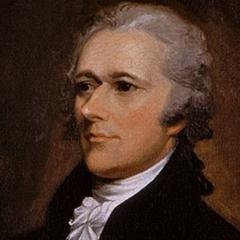
Alexander Hamilton
Alexander Hamilton was a Founding Father of the United States, born on January 11, 1757, and died on July 12, 1804. He played a crucial role in the American Revolutionary War and was instrumental in the drafting of the U.S. Constitution. As the first Secretary of the Treasury, Hamilton promoted fiscal stability and economic growth, establishing the First Bank of the United States and proposing solutions for federal debt. His ideas and policies had a profound impact on the early political and economic development of the United States. more
You May Also Like
Source: The Works of Alexander Hamilton: Miscellanies, 1774-1789: A full vindication; The farmer refuted; Quebec bill; Resolutions in Congress; Letters from Phocion; New-York Legislature, etc
Source: Washington's Farewell Address: The Proclamation of Jackson Against Nullification, and the Declaration of Independence
Source: Memoirs of Benjamin Franklin
Source: Works: containing several political and historical tracts not included in any former edition ...
Source: The Writings of George Washington: Being His Correspondence, Addresses, Messages, and Other Papers, Official and Private
Source: The Federalist, on the New Constitution, Written in the Year 1788
Source: The Real Thomas Jefferson