Quotessence
Home / Quotes / Quote by John Owen

Quote by John Owen

“Consider who and what you are; who the Spirit is that is grieved, what he has done for you, what he comes to your soul about, what he has already done in you; and be ashamed. Among those who walk with God, there is no greater motive and incentive unto universal holiness, and the preserving of their hearts and spirits in all purity and cleanness than this: That the blessed Spirit, who has undertaken to dwell in them, is continually considering what they give entertainment in their hearts unto, and rejoices when his temple is kept undefiled.”

Quote by John Owen

Author
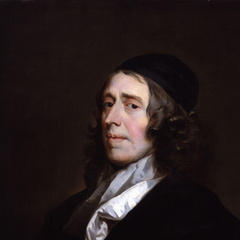
John Owen
John Owen

John Owen (1616-1683) was a prominent English theologian, writer, and pastor. His works have had a profound impact on Christian theology, particularly in the areas of predestination and moral theology. more

You May Also Like

“But to procrastinate and prevaricate simply because you're afraid of erring, when others - I mean our brethren in Germany - must make infinitely more difficult decisions every day, seems to me almost to run counter to love. To delay or fail to make decisions may be more sinful than to make wrong decisions out of faith and love.”

“For the essence of sin is man substituting himself for God [Gen. 3:1-7], while the essence of salvation is God substituting himself for man [2 Cor. 5:21]. Man asserts himself against God and puts himself where only God deserves to be; God sacrifices himself for man and puts himself where only man deserves to be.”

“The growth of trees and plants takes place so slowly that it is not easily seen. Daily we notice little change. But, in course of time, we see that a great change has taken place. So it is with grace. Sanctification is a progressive, lifelong work (Prov 4:18). It is an amazing work of God's grace and it is a work to be prayed for (Rom 8:27).”

“Great winds and storms help fruit-bearing trees. So also do corruptions and temptations help the fruitfulness of grace and holiness. The storm loosens the earth round its roots so the tree is able to get its roots deeper into the earth, where it receives fresh supplies of nourishment. But only much later will it be seen to bring forth better fruit. So corruptions and temptations develop the roots of humility, self-abasement and mourning in a deeper search for that grace by which holiness grows strong. But only later will there be visible fruits of increased holiness.”