Quotessence
Home / Quotes / Quote by P. J. O'Rourke

Quote by P. J. O'Rourke

Author

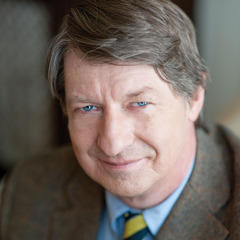
P. J. O'Rourke
P. J. O'Rourke

P. J. O'Rourke, born on November 14, 1947, is a renowned satirical writer known for his humorous and satirical commentary on political and social issues. His distinctive writing style, characterized by wit and sharpness, has won him a wide readership. more

You May Also Like

“Bob Wallace was my editor at Rolling Stone when I first started writing there, and he's a wonderful editor. I was in the Philippines during the Marcos overthrow, and I was up on what was called Smokey Mountain. I think it's gone now, but it was a garbage dump with a bunch of people living on it. I was talking to Bob on the phone, and I told him, "I'm a humorist. I can't write about this." And Bob told me to let my style be dictated by the subject, to take what I saw and write about it in the tone that it requires.”

“If I do, I say so. That's the only way out of that. If there are three words that need to be used more in American journalism, commentary, politics, personal life... it's the magic words "I don't know." I mean, there are certain basic principles, like the dignity of the individual and the individual's responsibility, and certain basic economic principles, like how when something costs less, more of it will be consumed... There are certain things that I feel pretty confident about.”

“I had the good fortune to direct my first professional production with one of my Dad's masterpieces, The Man Who Came To Dinner. What it taught me was how beautifully the Kaufman and Hart plays are constructed: with economy, and wit, and warmth, and a sensibility, and heart/Hart that appeals to every stripe of theatregoers. It was a gift that can't be underestimated.”

“What makes You Can't Take It With You so popular and a perennial favorite with student and amateur productions (it continues to be one of the top 10 best-selling plays year after year) is the breadth of characters and personalities on display: in age, race, gender, social status, a true cross section of society when the play was written and also true today in terms of the reality of the humanity on display.”