Quotessence
Home / Quotes / Quote by Otto Weininger

Quote by Otto Weininger

“No one suffers so much as he [the genius] with the people, and, therefore, for the people, with whom he lives. For, in a certain sense, it is certainly only "by suffering" that a man knows. If compassion is not itself clear, abstractly conceivable or visibly symbolic knowledge, it is, at any rate, the strongest impulse for the acquisition of knowledge. It is only by suffering that the genius understands men. And the genius suffers most because he suffers with and in each and all; but he suffers most through his understanding. . . .”

Quote by Otto Weininger

Work

Sex & Character

This book delves into the intricate connections between sexual behaviors, preferences, and individual characteristics, offering insights into the complex interplay between the two. more

Author

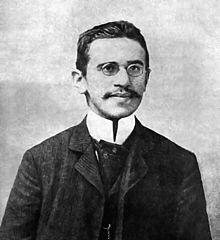
Otto Weininger
Otto Weininger

Otto Weininger was an Austrian philosopher born on April 3, 1880, and died on October 4, 1903. His thoughts mainly revolve around gender, aesthetics, and ethics, and have had a profound impact on philosophy and psychology in the following years. more

You May Also Like

“There are probably very few people who have not at some time of their lives had some quality of genius. If they have not had such, it is probable that they have also been without great sorrow or great pain. They would have needed only to live sufficiently intently for a time for some quality to reveal itself. The poems of first love are a case in point, and certainly such love is a sufficient stimulus.”

“A nation orients itself by its own geniuses, and derives from them its ideas of its own ideals, but the guiding star serves also as a light to other nations. As speech has been created by a few great men, the most extraordinary wisdom lies concealed in it, a wisdom which reveals itself to a few ardent explorers but which is usually overlooked by the stupid professional philologists.”

“It is certainly true that most men need some kind of a God. A few, and they are the men of genius, do not bow to an alien law. The rest try to justify their doings and misdoings, their thinking and existence (at least the menial side of it), to some one else, whether it be the personal God of the Jews, or a beloved, respected, and revered human being. It is only in this way that they can bring their lives under the social law. . . .”

“The man of genius is he whose ego has acquired consciousness. He is enabled by it to distinguish the fact that others are different, to perceive the "ego" of other men, even when it is not pronounced enough for them to be conscious of it themselves. But it is only he who feels that every other man is also an ego, a monad, an individual centre of the universe, with specific manner of feeling and thinking and a distinct past, he alone is in a position to avoid making use of his neighbours as means to an end.”