“We can only know in the nervous system what we have known in behavior first.”
Quote by Julian Jaynes
Work
The Origin of Consciousness in the Breakdown of the Bicameral Mind
This book delves into the concept of the bicameral mind, a theory suggesting that early humans experienced a form of consciousness that was split between two parts of the brain. The author examines the implications of this theory on the development of human consciousness and society. more
Author
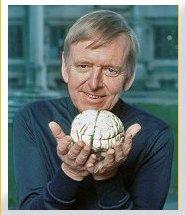
Julian Jaynes
Julian Jaynes was a psychologist known for his hypothesis on the origin of human consciousness. His book 'The Origin of Consciousness in the Breakdown of the Bicameral Mind' proposed a theory that human consciousness experienced a shift from collective unconsciousness to individual consciousness around 1000 BCE. more
You May Also Like
Source: The Origin of Consciousness in the Breakdown of the Bicameral Mind
“Indeed, it is sometimes almost as if the problem had to be forgotten to be solved.”
Source: The Origin of Consciousness in the Breakdown of the Bicameral Mind
“It is by metaphor that language grows.”
Source: The Origin of Consciousness in the Breakdown of the Bicameral Mind
Source: The Origin of Consciousness in the Breakdown of the Bicameral Mind
Source: The Origin of Consciousness in the Breakdown of the Bicameral Mind
Source: The Origin of Consciousness in the Breakdown of the Bicameral Mind
Source: The Origin of Consciousness in the Breakdown of the Bicameral Mind
Source: The Origin of Consciousness in the Breakdown of the Bicameral Mind
“The king dead is a living god.”
Source: The Origin of Consciousness in the Breakdown of the Bicameral Mind