Quotessence
Home / Quotes / Quote by Karl Wilhelm Friedrich Schlegel

Quote by Karl Wilhelm Friedrich Schlegel

“The French Revolution, Fichte's Theory of Knowledge, and Goethe's Wilhelm Meister are the three greatest tendencies of the age. Whoever takes offence at this combination, and whoever does not consider a revolution important unless it is blatant and palpable, has not yet risen to the lofty and broad vantage point of the history of mankind.”

Quote by Karl Wilhelm Friedrich Schlegel

Author
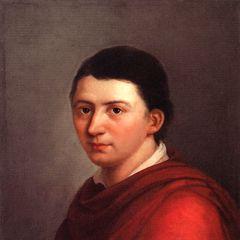
Karl Wilhelm Friedrich Schlegel

Karl Wilhelm Friedrich Schlegel was a German poet known for his significant contributions to Romantic literature. His works deeply influenced the development of German literature, particularly in the realms of poetry and drama. more

You May Also Like

“The two basic maxims of the so-called historical criticism are the postulate of the common and the axiom of the ordinary. Postulate of the common: everything really great, good, and beautiful, is improbable, since it is extraordinary and therefore at least suspect. Axiom of the ordinary: our conditions and environment must have existed everywhere, for they are really so natural.”

“It is a thoughtless and immodest presumption to learn anything about art from philosophy. Some do begin as if they hoped to learnsomething new here, since philosophy cannot and should not do anything further than develop the given art experiences and the existing art concepts into a science, improve the views of art, and promote them with the help of a thoroughly scholarly art history, and produce that logical mood about these subjects too which unites absolute liberalism with absolute rigor.”

“As long as the artist invents and is inspired, he remains in a constrained state of mind, at least for the purpose of communication. He then wants to say everything, which is the wrong tendency of young geniuses or the right prejudice of old bunglers. Thus, he fails to recognize the value and dignity of self-restraint, which is indeed for both the artist and the man the first and the last, the most necessary and the highest goal.”