“All of life is a dispute over taste and tasting.”
Quote by Friedrich Nietzsche
Work
Thus Spoke Zarathustra: A Book for Everyone and Nobody
Thus Spoke Zarathustra is a profound and influential work that delves into the nature of existence, morality, and the human condition. It is a collection of aphorisms and parables narrated by the character Zarathustra, who seeks to inspire a new kind of human being, the overman. The book is known for its challenging and often cryptic style, and it has had a significant impact on Western philosophy and literature. more
Author
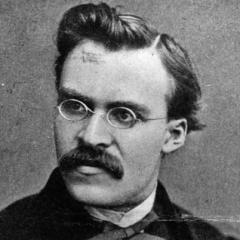
Friedrich Nietzsche
Friedrich Nietzsche was a German philosopher, cultural critic, poet, and writer whose works have had a profound impact on subsequent philosophy, literature, and thought. His ideas revolve around concepts such as the 'will to power', the 'Übermensch', and the 'eternal recurrence'. more
You May Also Like
Source: Correspondence and Table-talk: With a Memoir
“Taste is nothing but an enlarged capacity for receiving pleasure from works of imagination.”
Source: Men and manners: sketches and essays
“Taste has no system and no proofs.”
Source: A Susan Sontag reader
Source: The Artist as Critic: Critical Writings of Oscar Wilde