Quotessence
Home / Quotes / Quote by Morris Kline

Quote by Morris Kline

Work

Mathematics: The Loss of Certainty

This book delves into the historical and philosophical shifts that occurred in mathematics during a pivotal period, highlighting the decline of classical certainty and the emergence of new mathematical approaches. more

Author
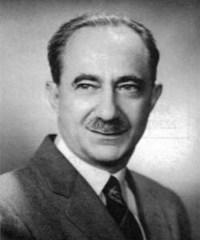
Morris Kline
Morris Kline

Morris Kline was a renowned mathematician, known for his contributions to mathematics education, the history of mathematics, and the philosophy of mathematics. His influence on the reform of mathematics education in the mid-20th century was profound, and he authored numerous popular mathematics textbooks. more

You May Also Like

“I have seen something of the project of M. de St. Pierre, for maintaining a perpetual peace in Europe. I am reminded of a device in a cemetery, with the words: Pax perpetua ; for the dead do not fight any longer: but the living are of another humor; and the most powerful do not respect tribunals at all.”

“Schizophrenia --its nature, etiology, and the kind of therapy to use for it--remains one of the most puzzling of the mental illnesses. The theory of schizophrenia presented here is based on communications analysis, and specifically on the Theory of Logical Types. From this theory and from observations of schizophrenic patients is derived a description, and the necessary conditions for, a situation called the "double bind"--a situation in which no matter what a person does, he "can't win." It is hypothesized that a person caught in the double bind may develop schizophrenic symptoms”

“Women watched for the spectacular performances of the men, and there can be no reasonable doubt that the presence of an audience is a very important factor in shaping the men's behavior. In fact, it is probable that the men are more exhibitionistic because the women admire their performances. Conversely, there can be no doubt that the spectacular behavior is a stimulus which summons the audience together, promoting in the women the appropriate behavior.”

“Our initial sensory data are always "first derivatives," statements about differences which exist among external objects or statements about changes which occur either in them or in our relationship to them. Objects and circumstances which remain absolutely constant relative to the observer, unchanged either by his own movement or by external events, are in general difficult and perhaps always impossible to perceive. What we perceive easily is difference and change and difference is a relationship.”

“No organism can afford to be conscious of matters with which it could deal at unconscious levels. Broadly, we can afford to sink those sorts of knowledge which continue to be true regardless of changes in the environment, but we must maintain in an accessible place all those controls of behavior which must be modified for every instance. The economics of the system, in fact, pushes organisms toward sinking into the unconscious those generalities of relationship which remain permanently true and toward keeping within the conscious the pragmatic of particular instances.”