Quotessence
Home / Authors / Gregory Bateson
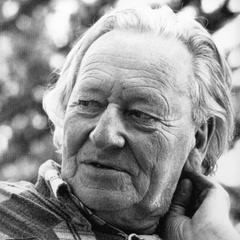
Gregory Bateson

Gregory Bateson Quotes

Anthropologist

Filter quotes by topic

Famous Gregory Bateson Quotes

“Earlier fundamental work of Whitehead, Russell, Wittgenstein, Carnap, Whorf, etc., as well as my own attempt to use this earlier thinking as an epistemological base for psychiatric theory, led to a series of generalizations: That human verbal communication can operate and always does operate at many contrasting levels of abstraction. These range in two directions from the seemingly simple denotative level (“The cat is on the mat”). One range or set of these more abstract levels includes those explicit or implicit messages where the subject of discourse is the language. We will call these metalinguistic (for example, “The verbal sound ‘cat’ stands for any member of such and such class of objects”, or “The word, ‘cat’ has no fur and cannot scratch”). The other set of levels of abstraction we will call metacommunicative (e.g., “My telling you where to find the cat was friendly”, or “This is play”). In these, the subject of discourse is the relationship between the speakers. It will be noted that the vast majority of both metalinguistic and metacommunicative messages remain implicit; and also that, especially in the psychiatric interview, there occurs a further class of implicit messages about how metacommunicative messages of friendship and hostility are to be interpreted.”

“We have been trained to think of patterns, with the exception of those of music, as fixed affairs. It is easier and lazier that way but, of course, all nonsense. In truth, the right way to begin to think about the pattern which connects is to think of it as primarily (whatever that means) a dance of interacting parts and only secondarily pegged down by various sorts of physical limits and by those limits which organisms characteristically impose.”

“It is as if the stuff of which we are made were totally transparent and therefore imperceptible and as if the only appearances of which we can be aware are cracks and planes of fracture in that transparent matrix. Dreams and percepts and stories are perhaps cracks and irregularities in the uniform and timeless matrix. Was this what Plotinus meant by an 'invisible and unchanging beauty which pervades all things'?”

“All science is an attempt to cover with explanatory devices-and thereby to obscure-the vast darkness of the subject. It is a game in which the scientist uses his explanatory principles according to certain rules to see if these principles can be stretched to cover the vast darkness. But the rules of the stretching are rigorous, and the purpose of the whole operation is really to discover what parts of the darkness still remain, uncovered by explanation. But this game has also a deeper, more philosophic purpose: to learn something about the very nature of explanation, to make clear some part of that most obscure matter-the process of knowing. (Epilogue, 1958)”

“Perhaps there is no such thing as unilateral power. After all, the man in power depends on receiving information all the time from outside. He responds to that information just as much as he causes things to happen... it is an interaction, and not a lineal situation.”

“Whenever we pride ourselves upon finding a newer, stricter way of thought or exposition we lose something of the ability to think new thoughts. And equally, of course, whenever we rebel against the sterile rigidity of formal thought and exposition and let our ideas run wild, we likewise lose. As I see it, the advances in scientific thought come from a combination of lose and strict thinking, and this combination is the most precious tool of science.”

“Schizophrenia --its nature, etiology, and the kind of therapy to use for it--remains one of the most puzzling of the mental illnesses. The theory of schizophrenia presented here is based on communications analysis, and specifically on the Theory of Logical Types. From this theory and from observations of schizophrenic patients is derived a description, and the necessary conditions for, a situation called the "double bind"--a situation in which no matter what a person does, he "can't win." It is hypothesized that a person caught in the double bind may develop schizophrenic symptoms”

“Women watched for the spectacular performances of the men, and there can be no reasonable doubt that the presence of an audience is a very important factor in shaping the men's behavior. In fact, it is probable that the men are more exhibitionistic because the women admire their performances. Conversely, there can be no doubt that the spectacular behavior is a stimulus which summons the audience together, promoting in the women the appropriate behavior.”

“Our initial sensory data are always "first derivatives," statements about differences which exist among external objects or statements about changes which occur either in them or in our relationship to them. Objects and circumstances which remain absolutely constant relative to the observer, unchanged either by his own movement or by external events, are in general difficult and perhaps always impossible to perceive. What we perceive easily is difference and change and difference is a relationship.”

“No organism can afford to be conscious of matters with which it could deal at unconscious levels. Broadly, we can afford to sink those sorts of knowledge which continue to be true regardless of changes in the environment, but we must maintain in an accessible place all those controls of behavior which must be modified for every instance. The economics of the system, in fact, pushes organisms toward sinking into the unconscious those generalities of relationship which remain permanently true and toward keeping within the conscious the pragmatic of particular instances.”

“If a man achieves or suffers change in premises which are deeply embedded in his mind, he will surely find that the results of that change will ramify throughout his whole universe.”

“What we mean by information - the elementary unit of information - is a difference which makes a difference, and it is able to make a difference because the neural pathways along which it travels and is continually transformed are themselves provided with energy. The pathways are ready to be triggered. We may even say that the question is already implicit in them.”

“Science, like art, religion, commerce, warfare, and even sleep, is based on presuppositions. It differs, however, from most other branches of human activity in that not only are the pathways of scientific thought determined by the presuppositions of the scientists but their goals are the testing and revision of old presuppositions and the creation of new.”

“What is true is that the idea of power corrupts. Power corrupts most rapidly those who believe in it, and it is they who will want it most. Obviously, our democratic system tends to give power to those who hunger for it and gives every opportunity to those who don't want power to avoid getting it. Not a very satisfactory arrangement if power corrupts those who believe in it and want it.”

“Numbers are the product of counting. Quantities are the product of measurement. This means that numbers can conceivably be accurate because there is a discontinuity between each integer and the next. Between two and three there is a jump. In the case of quantity, there is no such jump; and because jump is missing in the world of quantity, it is impossible for any quantity to be exact. You can have exactly three tomatoes. You can never have exactly three gallons of water. Always quantity is approximate.”

“Evolution has long been badly taught. In particular, students - and even professional biologists - acquire theories of evolution without any deep understanding of what problem these theories attempt to solve. They learn but little of the evolution of evolutionary theory.”

“Science sometimes improves hypotheses and sometimes disproves them. But proof would be another matter and perhaps never occurs except in the realms of totally abstract tautology. We can sometimes say that if such and such abstract suppositions or postulates are given, then such and such abstract suppositions or postulates are given, then such and such must follow absolutely. But the truth about what can be perceived or arrived at by induction from perception is something else again.”