“Earlier fundamental work of Whitehead, Russell, Wittgenstein, Carnap, Whorf, etc., as well as my own attempt to use this earlier thinking as an epistemological base for psychiatric theory, led to a series of generalizations: That human verbal communication can operate and always does operate at many contrasting levels of abstraction. These range in two directions from the seemingly simple denotative level (“The cat is on the mat”). One range or set of these more abstract levels includes those explicit or implicit messages where the subject of discourse is the language. We will call these metalinguistic (for example, “The verbal sound ‘cat’ stands for any member of such and such class of objects”, or “The word, ‘cat’ has no fur and cannot scratch”). The other set of levels of abstraction we will call metacommunicative (e.g., “My telling you where to find the cat was friendly”, or “This is play”). In these, the subject of discourse is the relationship between the speakers. It will be noted that the vast majority of both metalinguistic and metacommunicative messages remain implicit; and also that, especially in the psychiatric interview, there occurs a further class of implicit messages about how metacommunicative messages of friendship and hostility are to be interpreted.”
Quote by Gregory Bateson
Author
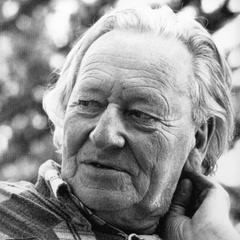
Gregory Bateson
Gregory Bateson was a prominent anthropologist whose research spanned across various fields such as culture, semiotics, systems theory, and cognitive science. His work has had a profound impact on interdisciplinary studies that followed. more
You May Also Like
Source: Rogue Moon
Source: Hyperion
Source: Conduct Unbecoming: Rape, Torture, and Post Traumatic Stress Disorder from Military Commanders
Source: The Curious Incident of the Dog in the Night-Time
Source: The Enigma of Japanese Power: People and Politics in a Stateless Nation
“Logic only gives man what he needs,” he stammered. “Magic gives him what he wants.”
Source: The Elfish Gene: Dungeons, Dragons And Growing Up Strange