Quotessence
Home / Quotes / Quote by Philip Larkin

Quote by Philip Larkin

“Slowly light strengthens, and the room takes shape. It stands plain as a wardrobe, what we know, Have always known, know that we can't escape, Yet can't accept. One side will have to go. Meanwhile telephones crouch, getting ready to ring In locked-up offices, and all the uncaring Intricate rented world begins to rouse. The sky is white as clay, with no sun. Work has to be done. Postmen like doctors go from house to house.”

Quote by Philip Larkin

Author
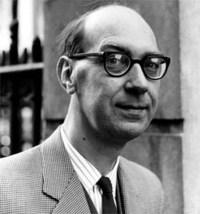
Philip Larkin
Philip Larkin

Philip Larkin (August 9, 1922 – December 2, 1985) was a renowned English poet, novelist, and librarian. He is widely regarded as one of the greatest poets of post-war Britain, known for his concise, bleak, and ironic style. Born in Coventry, Larkin studied at St John's College, Oxford. His major works include the poetry collections 'The Whitsun Weddings' and 'High Windows', and the novel 'Jill'. He spent most of his career as librarian at the University of Hull. Larkin's poetry often explores themes of death, loneliness, love, and the absurdity of everyday life. He rejected modernism in favor of traditional forms, and his precise, musical language earned him the Queen's Gold Medal for Poetry. His work continues to influence poets and readers worldwide. more

You May Also Like

“It matters not whether you win the race or not but that you cross the finish line with a smile and a bit of a laugh. Stress does not come from having too much on your plate. Stress comes from labeling too many of those things as very important. Discussing religion, no matter how in depth the discussion, should never be confused with actually practicing that religion.”

“If the religious experience were simply some naive impression of the uninformed it would not have resulted in such intellectual insight, such spiritual exaltation, such spectacular religious ritual, or in the immense volume of song and poetry and literature and dance that humans have produced.”

“We are persons whose bodies can be objectively studied according to the impersonal laws of physics but whose minds are subjectively experienced in ways science has not yet been able to fathom. In short, by radically seperating science from religion, we are not merely segregating two human institutions; we are fragmenting ourselves as individuals and as a society in ways that lead to deep, unresolved conflicts in terms of our view of the world, our values, and our way of life.”

“Secularists are wrong when they ask believers to leave their religion at the door before entering into the public square. Frederick Douglass, Abraham Lincoln, Williams Jennings Bryan, Dorothy Day, Martin Luther King - indeed, the majority of great reformers in American history - were not only motivated by faith, but repeatedly used religious language to argue for their cause. To say that men and women should not inject their "personal morality" into public policy debates is a practical absurdity.”

“We, however, have a different goal: the Son of God, the true man. He is the measure of true humanism. An "adult" faith is not a faith that follows the trends of fashion and the latest novelty; a mature, adult faith is deeply rooted in friendship with Christ. It is this friendship that opens us up to all that is good and gives us a criterion by which to distinguish the true from the false, and deceit from truth.”

“Before [Hindus and Moslems] dare think of freedom, they must be brave enough to love one another, to tolerate one another's religion, even prejudices and superstitions, and to trust one another. This requires faith in oneself.”

“Religion is important for humanity, but it should evolve with humanity. The first priority is to establish and develop the principle of pluralism in all religious traditions. If we, the religious leaders, cultivate a sincere pluralistic attitude, then everything will be more simple. It is good that most religious leaders are at least beginning to recognize other traditions, even though they may not approve of them. The next step is to accept that the idea of propagating religion is outdated. It no longer suits the times.”