Quotessence
Home / Quotes / Quote by George Washington Carver

Quote by George Washington Carver

“Fear of something is at the root of hate for others, and hate within will eventually destroy the hater. Keep your thoughts free from hate, and you need have no fear from those who hate you.”

Quote by George Washington Carver

Author
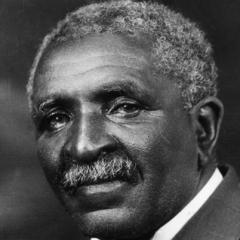
George Washington Carver

George Washington Carver was a renowned American scientist known for his work in plant research and agricultural improvement. Born into a slave family in Missouri, he rose to become a prominent agricultural chemist and inventor. Carver's research focused on the utilization of peanuts, soybeans, and other crops, and his contributions had a profound impact on American agriculture. more

You May Also Like

“Knowledge is like a knife. In the hands of a well-balanced adult it is an instrument for good of inestimable value; but in the hands of a child, an idiot, a criminal, a drunkard or an insane man, it may cause havoc, misery, suffering and crime. Science and religion have this in common, that their noble aims, their power for good, have often, with wrong men, deteriorated into a boomerang to the human race.”

“Of agitating good roads there is no end, and perhaps this is as it should be, but I think you'll agree that it is high time to agitate less and build more. [Here is] a plan whereby the automobile industry of America can build a magnificent "Appian Way" from New York to San Francisco, having it completed by May 1, 1915 and present it to the people of the United States.”

“The chemists work with inaccurate and poor measuring services, but they employ very good materials. The physicists, on the other hand, use excellent methods and accurate instruments, but they apply these to very inferior materials. The physical chemists combine both these characteristics in that they apply imprecise methods to impure materials.”

“The specific goals we set for ourselves are almost always subsidiary to our long range intentions. A good parent, a good neighbour, a good citizen, is not good because his specific goals are acceptable, but because his successive goals are ordered to a dependable and socially desirable set of values. (1947)”