Quotessence
Home / Quotes / Quote by Michael Scott

Quote by Michael Scott

“Lava crust," he said, voice hushed in wonder. "It's lava crust. The fire is burning within the creature's skin." "No wonder it's in pain," Machiavelli muttered. "You sound almost sorry for it," Dee snapped. "I never traded my humanity for my long life, Doctor. I've always remembered my roots." His voice hardened, turning contemptous. "You worked so hard to be like your Elder master that you've forgotten what it is like to feel human—to be human. And we humans"—he stressed the last word—"have the capacity to feel another creature's pain. It is what lifted the humani above the Elders, it is what made them great.”

Quote by Michael Scott

Work

The Magician

The Magician is a work of fiction that centers on a protagonist who practices the craft of magic, delving into the complexities of their identity, relationships, and the boundaries between reality and performance. The narrative examines how the pursuit of mastery in illusion shapes the magician's understanding of truth and self, often set against a backdrop of societal expectations and personal ambition. The story may involve elements of mystery, psychological depth, and the interplay between public persona and private struggles, reflecting on the nature of creativity and deception. more

Author

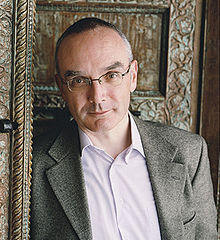
Michael Scott
Michael Scott

Michael Scott is an Irish author born on September 28, 1959. Known for his unique humor and insightful literary style, his works have gained popularity among readers of all ages. more

You May Also Like

“The words chance and genius do not denote any really existing thing and therefore cannot be defined. Those words only denote a certain stage of understanding of phenomena. I do not know why a certain event occurs; I think that 1 cannot know it; so 1 do not try to know it and I talk about chance. I see a force producing effects beyond the scope of ordinary human agencies; I do not understand why this occurs and I talk of genius. To a herd of rams, the ram the herdsman drives each evening into a special enclosure to feed and that becomes twice as fat as the others must seem to be a genius. And it must appear an astonishing conjunction of genius with a whole series of extraordinary chances that this ram, who instead of getting into the general fold every evening goes into a special enclosure where there are oats—-that this very ram, swelling with fat, is killed for meat. But the rams need only cease to suppose that all that happens to them happens solely for the attainment of their sheepish aims; they need only admit that what happens to them may also have purposes beyond their ken, and they will at once perceive a unity and coherence in what happened to the ram that was fattened. Even if they do not know for what purpose they are fattened, they will at least know that all that happened to the ram did not happen accidentally.”

“A change is coming, whether or not I am paying attention. Life is no longer the same. I can feel it in the people around me: the scramble to get away from it, the terror that it might touch us, the urge to stay high and dry. I can feel us calcifying, separating, drawing in. I hope the change brings justice rather than suffering, connection rather than more rancour. I hope we can all rise above the urge for petty revenge. I hope, most of all, that we can learn to soften into this time and into each other. To merge again, somehow. To melt back into the landscapes that hold us, and that are still releasing the wisdom of millennia, quietly, slowly, if only we can learn to listen.”

“We, who so often think we're cultureless, can unpack a galaxy of stories from one garden weed. But the time has come for us to understand what these stories mean to us, and to reconnect with the other stories, too, which are all waiting for us in our gardens and surging up from the cracks in the pavement. We must tell them to our children, so that they can't imagine living without them. Telling them is an act of belonging, a way of pushing taproots deep into the ground. In a world full of restless and displaced people, it's an act of welcome, too. When we tell the stories of the things that inhabit our land, we help newcomers to read the deep terrain around them and perhaps to feel a little more at home. And storytelling is always an exchange; when we listen to what is told to us, we enrich our mythology. We get closer to the big beautiful metaphorical whole.”

“I'm a machine, like you. Like all of you. Blood-lust and rage are my character. Why does the lion not wisely settle down and be a horse? In any case, I too am learning, ordeal by ordeal, my indignity. It's all I have, my only weapon for smashing through these stiff coffin-walls of the world. So I dance in the moonlight, make foul jokes, or labor to shake the foundations of night with my heaped-up howls of rage. Something is bound to come of all this. I cannot believe such monstrous energy of grief can lead to nothing!”