Quotessence
Home / Quotes / Quote by Lewis H. Lapham

Quote by Lewis H. Lapham

“But the line of thought that I'd been chasing for several days was implicit in the ruins of the old Roman Empire, which gradually destroyed itself by substituting the faith in a legion of miraculous words for the strength of armies and the weight of walls.”

Quote by Lewis H. Lapham

Work

Waiting for the Barbarians

The story follows a lone official in a remote frontier province who must confront the moral complexities of his role in a corrupt empire. The narrative delves into the psychological and ethical challenges faced by the protagonist as he struggles with the oppressive nature of his society. more

Author
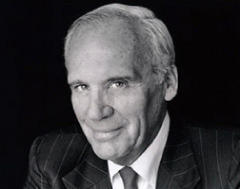
Lewis H. Lapham
Lewis H. Lapham

Lewis H. Lapham is an American writer born on January 8, 1935. He is known for his distinctive literary style and profound insights into American society and politics. more

You May Also Like

“My early years abroad were spent mainly upon the European Continent, and public duties since have led me to make prolonged stays in various Continental states France, Germany, the Netherlands, Italy, Russia where the study of Continental statesmen has been almost forced upon me.”

“A new danger now beset him [Grotius], the danger of becoming simply a venal pleader, a creature who grinds out arguments on this or that side, for this or that client: a mere legal beast of prey. Fortunately for himself and for the world he took a higher view of his life-work: his determination clearly was to make himself a thoroughly equipped jurist, and then, as he rose more and more in his profession, to use his powers for the good of his country and of mankind.”

“Even before Melanchthon sank into his grave, he was dismayed at seeing Lutheranism stiffen into dogmas and formulas, and heartbroken by a persecution from his fellow-Protestants more bitter than anything he had ever experienced from Catholics.”

“The young man [Turgot] destined for an ecclesiastical career was placed within walls carefully designed to keep out all currents of new thought; his studies, his reading, his professors, his associates, all were combined to keep from him any results of observation or reflection save those prescribed: probably, of all means for stifling healthy and helpful thought, a theological seminary, as then conducted whether Catholic or Protestant, Jewish or Mohammedan, was the most perfect.”

“His [Turgot's] first important literary and scholastic effort was a treatise On the Existence of God. Few fragments of it remain, but we are helped to understand him when we learn that he asserted, and to the end of his life maintained, his belief in an Almighty Creator and Upholder of the Universe. It did, indeed, at a later period suit the purposes of his enemies, exasperated by his tolerant spirit and his reforming plans, to proclaim him an atheist; but that sort of charge has been the commonest of missiles against troublesome thinkers in all times.”

“This whole theory [of John Law and Jean Terrasson], as dear to French financial schemers in the eighteenth century as to American "Greenbackers" in the nineteenth, had resulted, under the Orleans Regency and Louis XV, in ruin to France financially and morally, had culminated in the utter destruction of all prosperity, the rooting out of great numbers of the most important industries, and the grinding down of the working people even to starvation.”