Quotessence
Home / Quotes / Quote by Laura Mullen

Quote by Laura Mullen

“I can tell that I shaped the book very deliberately, after a great deal of thought, and that I insisted this piece function as a prologue, but I find the word "intention," confusing ("trust the art," as D.H. Lawrence said, "not the artist"). These speculations are perhaps better responded to by text and reader, rather than author.”

Quote by Laura Mullen

Author
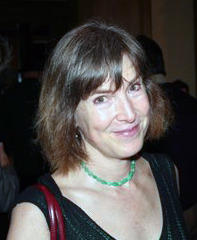
Laura Mullen
Laura Mullen

Laura Mullen, born in 1958, is an accomplished American poet known for her profound emotional depth and unique narrative style. Her works have been widely appreciated by readers. more

You May Also Like

“Helen Vendler calls this kind of interrogation of a work "roads not taken," suggesting that it's useful, when writing critically, to consider what differences it makes to the work or the encounter with the work if changes are made. It's one way of better understanding your experience, comparing it to other possible experiences you can imagine having.”

“I had Paterson, and The Art Lover, to guide me for The Tales of Horror (written from 1988-'97 and published in 1999), but I still was so lost, back then, as I tried to understand what I was writing and how it went together. There was a draft of that manuscript that had all these brightly colored paper clips on the pages so I could visualize what I saw as the book's themes and threads - that was a long time ago.”

“Complicated Grief was written in larger and more coherent (if disparate) shapes. The question was how they fit together. The mind is coherent, trust that was the best writing advice I ever got (I got it from Carole Maso and I pass it on). It's true, and clearer and clearer as one grows and gains an improved sense of who one actually is (as versus who one was supposed to be).”

“The most important aspect of writing the pieces that make up this eighth book was yielding to my obsessive side, letting my own "complicated grief" in on the process. You can imagine how tempting it is to try to fight the part of you that loops and loops, caught up in tangled sorrow from which it seems there's no escape.”

“We live in a culture that insists on "moving on" (even while our loyalty to and love of the franchise and the sequel give away a larger loopiness). But I tend to dwell or obsess or meditate, and I came back to, for instance, the figure of Dickens's "Miss Havisham" with some (self) recognition if not relief.”

“Miss Havisham is an important feminine literary figure in the tradition of Antigone (though it's significant that Antigone is fighting to bury something and Miss Havisham refuses, as it were, to bury the corpse). Like Hamlet, she's focused on what everyone would rather not know or would like to forget, and she seems crazy / stuck as well as bitter, but she's also a perfect prototype of a performance artist. She's intentionally hard to deal with inviting the audience to remain with the violated body, the evidence of violence.”

“It's painful, but it's part of the recognition that makes real healing possible, if healing is possible (the jury is out on that, that's the usual phrase - should I say the jury is deadlocked?). Staying with the pain, attending to it, being present to and with it - that's the task, because that's the only (as far as I can tell) hope of finding a way forward.”