“In this work are exhibited, in a very high degree, the two most engaging powers of an author. New things are made familiar, and familiar things are made new.”
Quote by Samuel Johnson
Work
The works of Samuel Johnson, LL.D.: Together with his life, and notes on his Lives of the poets, by Sir John Hawkins, Knt. In eleven volumes ...
The book is a compilation of Samuel Johnson's literary works, accompanied by a biography and critical analysis of his Lives of the poets. Authored by Sir John Hawkins, it offers an in-depth look into Johnson's life and contributions to literature. The collection is presented across eleven volumes, showcasing the breadth of Johnson's work and the scholarly insights provided by Hawkins. more
Author
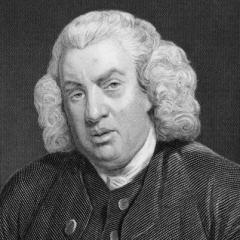
Samuel Johnson
Samuel Johnson was an English writer, poet, and lexicographer, renowned for his comprehensive English dictionary, 'A Dictionary of the English Language', published in 1755. His distinctive writing style and wit have cemented his place as a significant figure in the history of English literature. more
You May Also Like
Source: The Works of Samuel Johnson, LL.D..: The Adventurer and Idler
“There seems to be a strange affectation in authors of appearing to have done everything by chance.”
Source: Lives of the most eminent English poets, with critical observations on their works. With notes by P. Cunningham
Source: The Rambler: In Four Volumes..
Source: The Works of Samuel Johnson, LL.: D., with an Essay on His Life and Genius
“Invention is almost the only literary labour which blindness cannot obstruct.”
Source: The works of the English poets, from Chaucer to Cowper
Source: The works of Samuel Johnson, LL.D.: Together with his life, and notes on his Lives of the poets, by Sir John Hawkins, Knt. In eleven volumes ...
Source: The Works of Samuel Johnson, LL. D.: With an Essay on His Life and Genius /c by Arthur Murphy, Esq
Source: The Rambler
Source: The Works of Samuel Johnson, LL. D.
“Those authors who would find many readers, must endeavour to please while they instruct.”
Source: Works